
Erica vestita
Erica vestita Thunb.
Description
Growing requirements
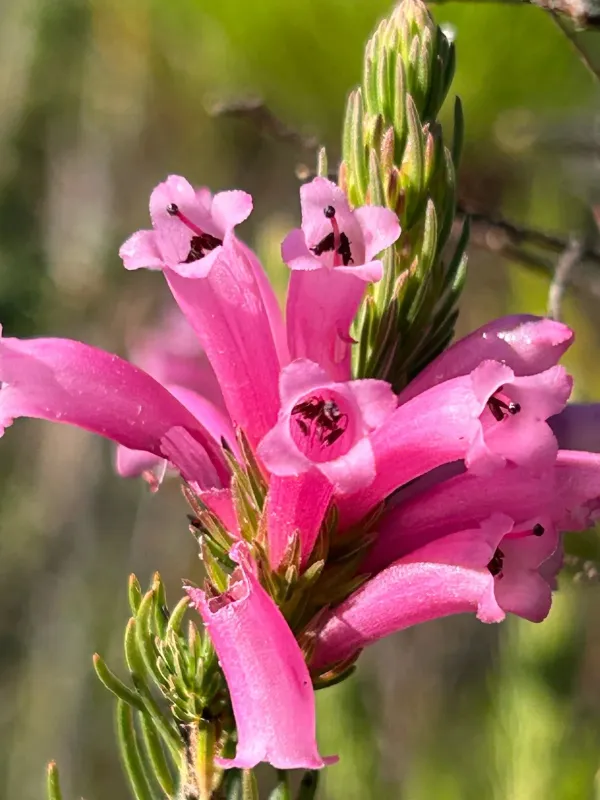
Erica vestita, commonly known as a species of heath, belongs to the Ericaceae family. Native to the southwestern regions of South Africa, this perennial shrub is highly valued for its striking, tubular flowers and needle-like foliage that gives it a distinct ornamental appeal.
Cultivation requires specific soil conditions, mimicking its natural habitat. It thrives in acidic, well-drained, sandy soils. Gardeners must ensure excellent drainage as the root system is highly susceptible to rot if water is allowed to stagnate around the base of the plant.
Climatic requirements involve plenty of sunlight and moderate temperatures. Because this species is not frost-hardy, it is often managed as a container plant in temperate regions, requiring protection in a cool, bright greenhouse during the winter months.
Irrigation practices must be precise. Only soft or distilled water should be used, as the plant is calcifuge—sensitive to lime. Tap water with high mineral content can cause leaf chlorosis and irreversible damage to the sensitive root hairs.
Routine maintenance includes light pruning after the flowering period to maintain a compact shape. Applying an organic mulch, such as pine needles or wood chips, helps preserve soil moisture and keeps the root zone cool, which is essential for healthy growth.
Main diseases and pests
The primary threats to Erica vestita are fungal pathogens, specifically those causing root rot and damping-off. These usually develop when the soil remains too wet for extended periods, preventing the roots from accessing necessary oxygen.
Pest pressures primarily come from sap-sucking insects such as spider mites and mealybugs. These pests thrive in protected, dry indoor environments, often colonizing the underside of the foliage and causing stunted growth if left unmanaged.
Management of diseases involves stringent moisture control and the use of preventative fungicides if conditions are humid. Improving air circulation around the plants is one of the most effective ways to mitigate the risk of fungal spread.
Pest control should be integrated, involving physical removal of insects where possible, followed by the application of targeted insecticides. Biological controls can also be employed in greenhouse environments to keep populations at a manageable level.
Ensuring the plant is not over-fertilized is also a key strategy. Excessive nutrient application can lead to lush but weak growth, making the plant more susceptible to insect infestations and physiological stress.