
Erica melanthera
Erica melanthera L.
Description
Growing requirements
Erica melanthera, commonly known as the black-anthered heath, is a member of the Ericaceae family. Originating from South Africa, this evergreen shrub is highly valued for its dense, upright habit and prolific flowering period during the cooler months.
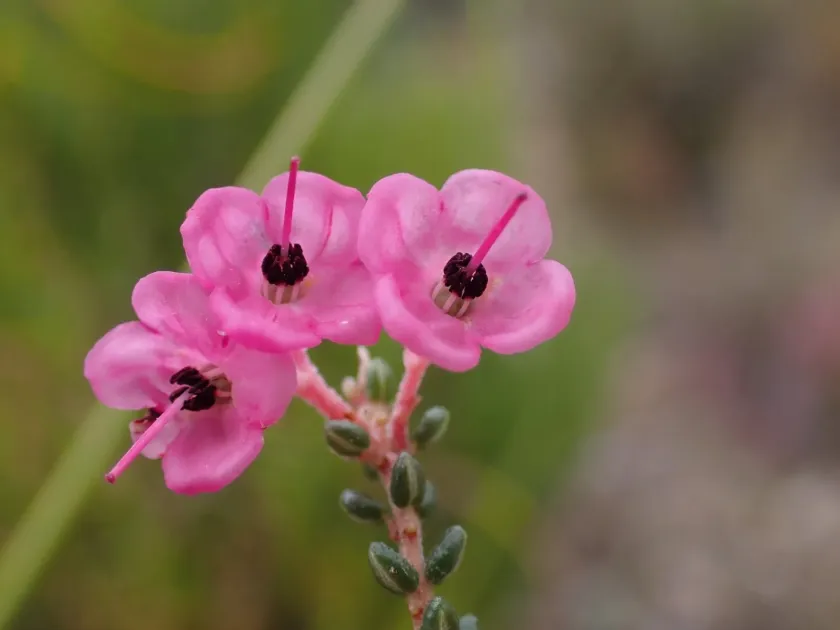
Botanically, it is characterized by narrow, needle-like leaves arranged in whorls along thin, wiry stems. The small, bell-shaped flowers are typically pink or white, featuring prominent, distinct black anthers that give the plant its specific botanical identity.
The cultural requirements are strict, focusing primarily on soil quality. Erica melanthera requires acidic, well-draining soil with a pH between 4.5 and 5.5. It thrives in peat-based mixes and is highly sensitive to alkaline soils, which cause immediate nutrient deficiencies.
Climate conditions play a vital role in its health. It prefers temperate climates with cool, humid air. While it can withstand light frost, it is not fully hardy in extreme cold, often necessitating its use as a container plant in temperate gardening zones.
Agricultural management involves careful hydration. While the root system must be kept moist, it cannot tolerate waterlogging. Using an organic mulch, such as pine needles or acidic compost, helps regulate soil temperature and maintain moisture levels effectively.
Main diseases and pests
Root rot is the most serious threat, usually caused by overwatering or poor drainage systems. Once the roots are damaged by pathogens, the plant rarely recovers, so prevention through proper substrate composition is paramount.
Powdery mildew can affect the foliage in conditions of poor air circulation and high humidity. Regular pruning to thin out the center of the shrub improves ventilation and significantly reduces the risk of this fungal disease.
Spider mites are common pests in indoor or sheltered environments where the air is dry. They thrive on the undersides of the leaves, eventually causing yellowing and webbing, which can be mitigated by regular misting and acaricide applications.
Scale insects often cluster on the stems, draining the plant's resources. Manual removal with an alcohol-soaked swab is effective for minor infestations, while systemic insecticides are required for more severe cases.
Aphids can colonize the soft, new growth during the spring flush. While they are usually easy to manage, they should be monitored to prevent the development of sooty mold, which grows on the honeydew secreted by these insects.