
Erica mammosa
Erica mammosa L.
Description
Growing requirements
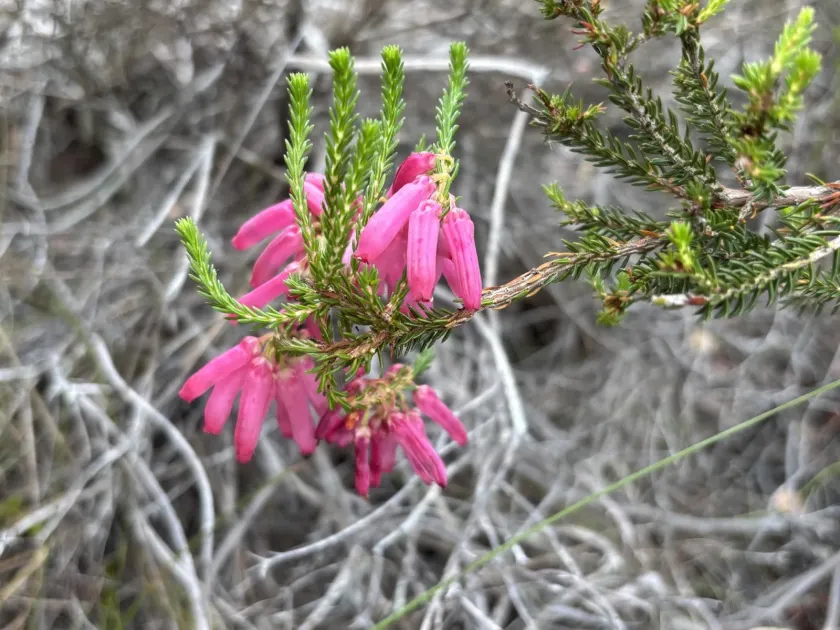
Erica mammosa L. is an ornamental evergreen shrub belonging to the Ericaceae family. Native to the Western Cape of South Africa, this species is well-adapted to Mediterranean-type climates, characterized by distinct wet and dry seasons.
Botanically, it features upright, woody stems adorned with whorled, needle-like leaves. The species is highly distinctive due to its tubular, nipple-shaped flowers that appear in shades of deep red, orange, or pink, providing significant aesthetic value.
The cultivation of this crop strictly requires acidic soils with a pH range of 4.5 to 5.5. A well-draining substrate rich in peat, organic matter, and horticultural grit is essential to maintain root health and prevent oxygen deprivation in the root zone.
Climate requirements include exposure to full sunlight, although protection from extreme afternoon heat is recommended in hot climates. The plant is moderately frost-sensitive, requiring protection or indoor shelter if temperatures drop significantly below freezing.
Agronomic management relies heavily on precise irrigation. Soft, lime-free water is mandatory for survival. Fertilizer applications should be very light, using specifically formulated fertilizers for ericaceous plants to avoid salt accumulation and nutrient toxicity.
Main diseases and pests
Phytophthora root rot is the most serious threat to Erica mammosa, usually triggered by waterlogged soil and poor air circulation around the root system.
Pest issues often include infestations of spider mites and mealybugs, especially in greenhouse environments where humidity levels may fluctuate significantly.
Effective management involves maintaining high sanitation standards, including the prompt removal and disposal of infected plant tissue to prevent the spread of fungal spores.
Preventive measures include the use of fungicides in damp weather conditions and monitoring leaf underside for the presence of sucking pests.
Ensuring adequate spacing between plants significantly reduces the risk of disease transmission and promotes optimal environmental conditions for vigorous growth.