
Mackay's heath
Erica mackaiana Bab.
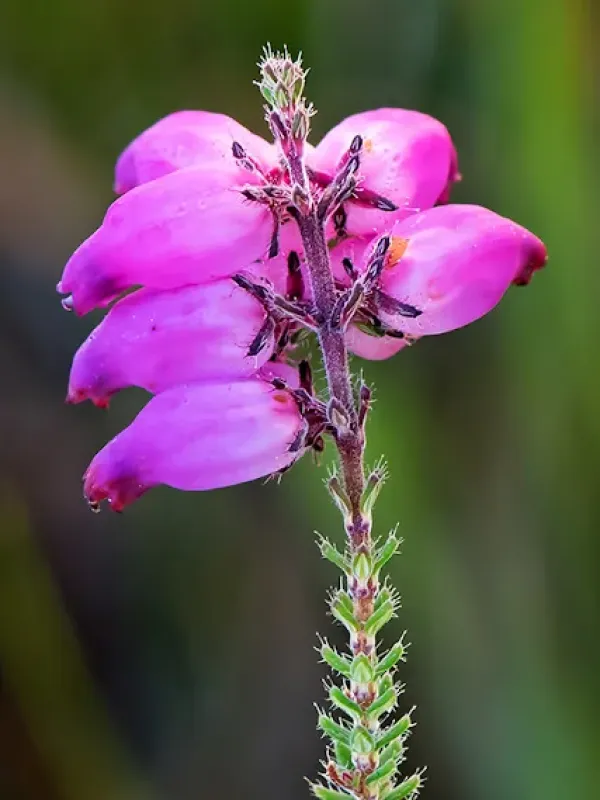
Description
Growing requirements
Mackay's heath (Erica mackaiana) is a perennial dwarf shrub belonging to the Ericaceae family. Its native range is notably restricted to specific locations in Ireland and Northern Spain, indicating a strong preference for cool, humid, and maritime-influenced environments.
The plant thrives in acidic soils that are rich in organic matter but possess excellent drainage characteristics. Waterlogging is detrimental to the fine, hair-like root system, which requires high oxygen availability to maintain healthy mycorrhizal associations.
Optimal site selection for this cultivar includes areas with full sunlight to partial shade. Adequate light exposure is essential to encourage compact growth habits and stimulate the production of bell-shaped flowers during the summer months.
Maintaining soil pH between 4.5 and 5.5 is non-negotiable for the successful cultivation of Erica mackaiana. Gardeners should employ peat-based substrates or specialized ericaceous composts to ensure the soil remains within this narrow acidic window.
In terms of temperature, the species is relatively hardy but benefits from a layer of mulch during winter to protect against soil heaving. Shelter from drying winds is particularly important to prevent winter dieback in exposed garden settings.
Main diseases and pests
The primary concern for Mackay's heath isPhytophthora root rot, which typically occurs when soils remain saturated for extended periods. Once infection sets in, it is difficult to eradicate, emphasizing the need for preventative drainage management.
Powdery mildew may develop if the plant is situated in a location with stagnant airflow. Improving spacing between plants and pruning to open up the canopy can significantly mitigate this risk.
Aphids occasionally colonize young, succulent growth, causing deformation and stunted development. These are typically managed through mild horticultural soaps or systemic insecticides if the infestation is severe.
Chlorosis is a frequent diagnostic sign indicating that the root zone has become too alkaline, preventing the uptake of iron. Periodic application of iron chelates and acidic fertilizers is recommended for maintenance.
Weed competition is a constant threat to this slow-growing shrub. Hand-weeding around the base is preferred over chemical herbicides, as the shallow roots are highly sensitive to soil disturbance and chemical burns.