
Redvein Enkianthus
Enkianthus serotina
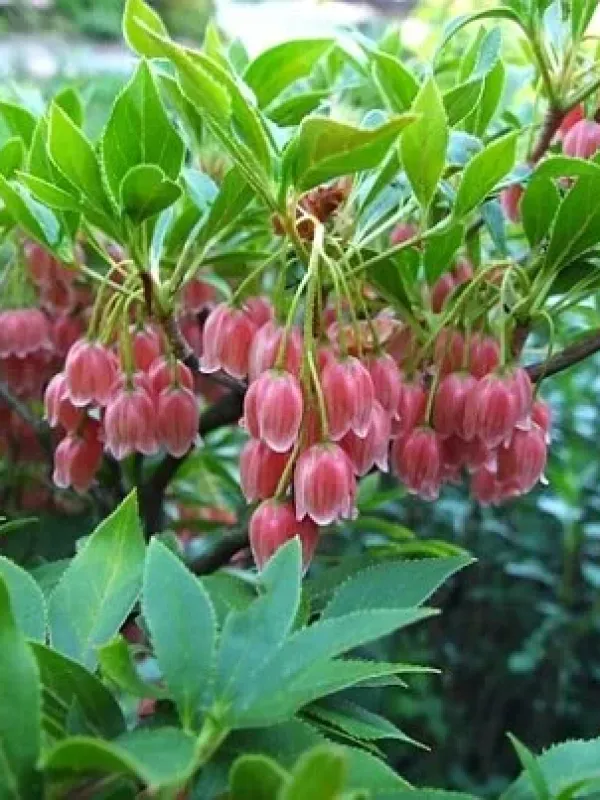
Description
Growing requirements
Redvein Enkianthus (Enkianthus campanulatus) is a prominent member of the Ericaceae family, native to the temperate forests of Japan. It is widely cultivated for its bell-shaped flowers and vivid autumn foliage.
The plant strictly requires acidic soil conditions with a pH level typically between 4.5 and 6.0. Soils that are heavy, clay-based, or neutral-to-alkaline will lead to chlorosis and stunted growth.
Optimal site selection includes partial shade with protection from harsh midday sun. These shrubs thrive in sites where they receive dappled light, mimicking their natural forest understory environment.
Water management is critical; the root zone must remain moist but never waterlogged. Incorporating organic matter, such as peat moss or pine needles, helps maintain both acidity and proper moisture retention.
In terms of agricultural practice, light pruning is recommended immediately after flowering to maintain shape. Fertilizer application should be limited to acid-forming formulas specifically designed for ericaceous plants.
Main diseases and pests
Root rot is the primary physiological threat caused by poor drainage, particularly in areas with high rainfall where soil aeration is insufficient to maintain root health.
The spider mite is a common pest that impacts the plant during periods of prolonged drought. It feeds on the underside of leaves, causing discoloration and eventual leaf drop.
Scale insects may also colonize the woody stems of mature shrubs. Manual removal or application of dormant oil during the early spring is effective for management.
Powdery mildew can occur in environments with poor air circulation or high humidity, requiring fungicidal sprays if the infection becomes widespread within the foliage.
To prevent these threats, maintaining proper plant spacing and ensuring the soil remains cool with a thick layer of organic mulch is essential for long-term plant vigor.