
Enkianthus chinensis
Enkianthus chinensis
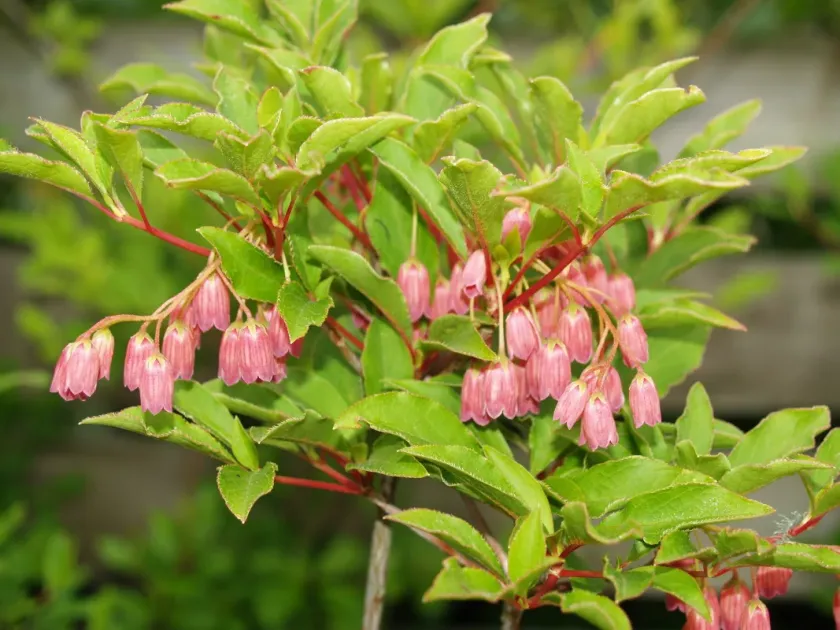
Description
Growing requirements
Enkianthus chinensis is a deciduous shrub belonging to the Ericaceae family. Native to the mountainous regions of China, this species thrives in forest edges and slopes, reflecting its adaptation to specific temperate conditions.
Botanically, it is recognized by its whorled leaves concentrated at the tips of its branches and its delicate, bell-shaped flowers that hang in clusters. These distinctive features make it a highly sought-after plant for aesthetic garden displays.
To cultivate this species successfully, one must provide an acidic soil environment. The soil should be consistently moist, well-drained, and rich in organic matter to mimic the natural woodland substrate required by ericaceous plants.
Climate preferences include sheltered locations that protect the shrub from harsh, drying winds and intense, direct sunlight. Partial shade is ideal for preventing leaf scorch and maintaining the plant's overall health and vigor throughout the growing season.
In terms of agricultural and horticultural use, Enkianthus chinensis is strictly an ornamental plant. It is widely praised for its spectacular autumn foliage, which turns vivid shades of red, orange, and gold, providing significant visual interest.
Main diseases and pests
Common diseases affecting this shrub include various root rots and fungal leaf spots, which typically develop under conditions of poor drainage or high humidity. Maintaining proper soil porosity is the most effective preventative measure against such issues.
Pest threats include mites and scale insects, which may infest the leaves and stems in warm, dry climates. Integrated pest management, including regular inspections and organic or chemical insecticidal treatments, is necessary to keep the plant in good condition.