
Enkianthus quinqueflorus
Enkianthus quinqueflorus
Description
Growing requirements
Enkianthus quinqueflorus is a species of flowering plant belonging to the Ericaceae family. Native to the subtropical regions of Southern China, it thrives in environments that mimic the humid, acidic-soil conditions of its natural forest habitat.
For successful cultivation, the plant requires well-draining, acidic soil rich in organic matter. Gardeners should incorporate peat moss, leaf mold, or pine bark into the planting site to ensure an optimal growing environment that mimics its natural woodland floor niche.
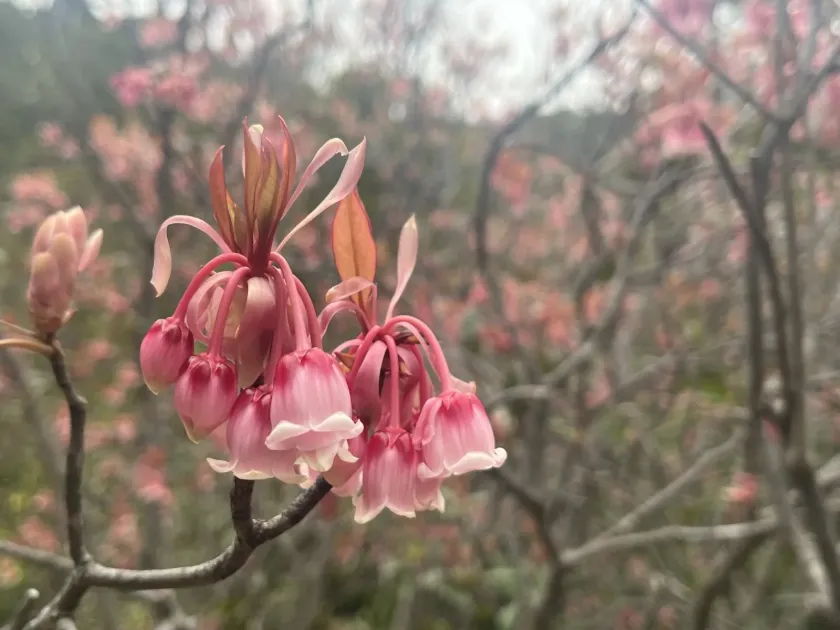
Botanically, the species is distinguished by its terminal clusters of five pinkish-white, bell-shaped flowers, which emerge in spring. The foliage is evergreen or semi-evergreen, displaying a thick, waxy texture that provides structural interest throughout the year.
It prefers a location that provides partial shade, specifically avoiding harsh afternoon sunlight that can desiccate the leaves. Protection from cold, drying winds is also essential, especially in regions where the climate approaches the limits of its hardiness.
Maintenance involves light pruning after the flowering period to shape the shrub and promote better airflow. Because its roots are fine and hair-like, the soil around the base should be kept cool and moist, ideally with an organic mulch layer that prevents rapid evaporation.
Main diseases and pests
The most significant threat to Enkianthus quinqueflorus is root rot caused by stagnant water, which often leads to rapid decline. Ensuring the planting site has excellent drainage is the most effective way to mitigate this risk for the long-term health of the shrub.
Chlorosis is a frequent nutritional issue, manifested by yellowing leaves with green veins, typically resulting from a soil pH that is too high. Regular applications of acidic fertilizers and iron chelates are necessary to correct this condition when it arises.
Spider mites are common pests that thrive in dry environments, often clustering on the undersides of leaves. Regular monitoring and the application of horticultural oils or appropriate miticides are standard management practices for keeping infestations in check.
Fungal leaf spot can develop during periods of high humidity and poor ventilation. Keeping the foliage dry by avoiding overhead irrigation and ensuring proper spacing between plants helps to reduce the frequency and severity of these infections.
While generally hardy when grown in appropriate zones, plants can be sensitive to chemical fertilizers. It is advised to use slow-release, acid-loving plant formulas applied in early spring to prevent root burn and support healthy, vigorous growth.