
Ehretia dicksonii
Ehretia dicksonii
Description
Sowing dates
Propagation of Ehretia dicksonii is typically achieved through seeds or stem cuttings. Seed viability can be improved by cold stratification before sowing in early spring.
Sowing should be performed in a well-draining substrate. Maintaining a consistent temperature between 20–22 degrees Celsius is crucial for successful germination in nursery conditions.
For cuttings, semi-hardwood stems collected during mid-summer demonstrate the highest rooting success rate when treated with rooting hormones.
Seedlings are best kept in pots for their first two years to ensure the root system is sufficiently robust before transplanting into permanent locations.
Regular irrigation is vital during the initial establishment phase, as the young plant is highly sensitive to soil moisture fluctuations.
Growing requirements
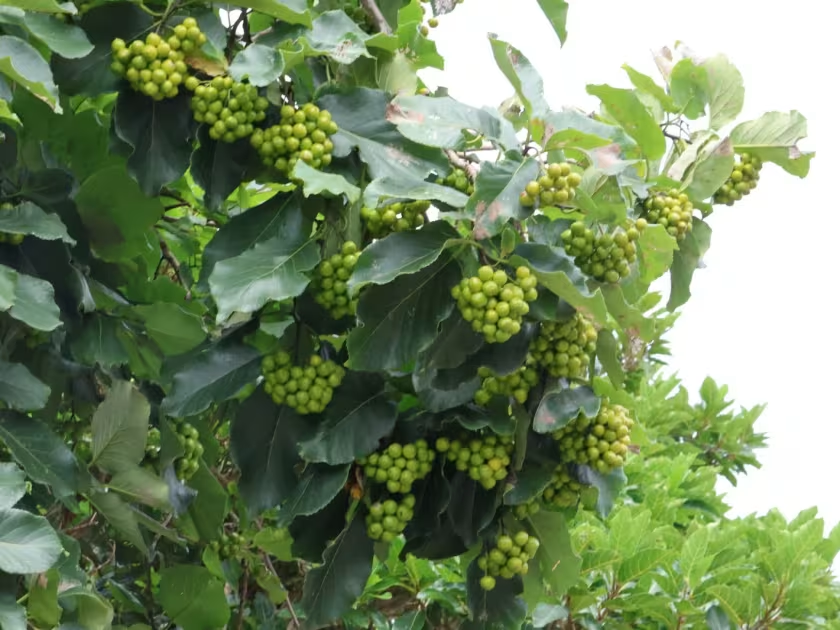
Ehretia dicksonii belongs to the Boraginaceae family and is recognized for its large, decorative foliage and aesthetic tree architecture.
The tree thrives in full sun exposure but can adapt to partial shade. Protection from strong, drying winds is necessary to maintain leaf integrity.
Deep, fertile, and well-drained loamy soils are ideal for this species. It does not tolerate prolonged waterlogging, which often leads to root collar issues.
Climatically, it prefers temperate to subtropical environments. While it has some tolerance for moderate cold, severe winter temperatures can cause significant dieback.
Applying organic mulch around the root zone helps regulate soil temperature and ensures moisture retention during the peak growing season.
Yield
This species is primarily utilized as an ornamental tree in landscaping. Its broad canopy provides excellent shade for public parks and private gardens.
It acts as an effective bee forage plant, supporting local pollinator populations which can indirectly boost the productivity of nearby agricultural crops.
The wood has historically found limited use in traditional crafts due to its grain structure and durability in indoor environments.
The fruits are often consumed by birds, which helps in seed dispersal and creates a more vibrant ecosystem within the cultivated area.
When used in urban forestry, Ehretia dicksonii contributes significantly to noise reduction and dust filtering in metropolitan environments.
Main diseases and pests
Pathogens like fungal leaf spot may appear in high humidity conditions, especially if the tree canopy lacks adequate airflow.
Aphids and various leaf-feeding caterpillars are the most common pests. Monitoring for these insects during the spring flush is a standard practice.
Effective management involves maintaining tree health through balanced fertilization and avoiding overhead watering that promotes fungal growth.
Weed management around the base of the tree is essential to prevent pests from finding refuge and to minimize resource competition.
Integrated pest management strategies should be applied to control outbreaks, focusing on minimal chemical intervention and natural predatory balance.