
Ehretia aspera
Ehretia aspera
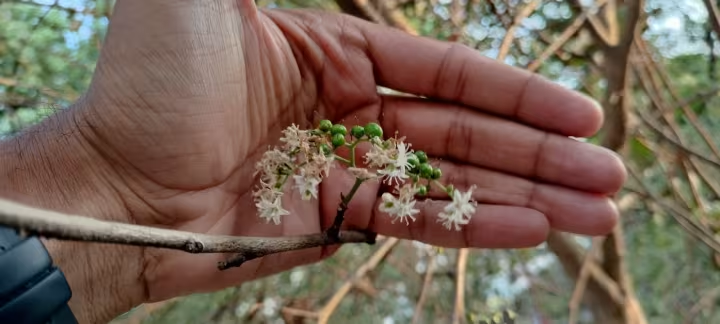
Description
Growing requirements
Ehretia aspera is a robust deciduous shrub or small tree belonging to the Boraginaceae family. It is native to tropical and subtropical regions, predominantly found in arid and semi-arid landscapes of Africa and Asia.
The plant thrives in well-draining sandy or loamy soils, showing significant tolerance to low-nutrient substrates. It is exceptionally drought-resistant, making it a viable candidate for reforestation and xeriscaping projects in challenging environments.
Optimal growth requires full sun exposure, which ensures healthy leaf development and profuse flowering. The plant is sensitive to waterlogging, necessitating excellent drainage to prevent root suffocation and subsequent decay.
Botanically, the species is distinguished by its rough, scabrous leaves, which serve as an adaptation to minimize transpiration. Its small, fragrant flowers are arranged in cymes and play a critical role in local ecosystems by supporting pollinators.
Cultivation practices involve minimal intervention, as the species is highly adapted to its natural habitat. Regular maintenance, such as selective pruning, is sufficient to maintain the vigor and aesthetic appeal of the plant in controlled agricultural settings.
Main diseases and pests
The primary threats to Ehretia aspera include fungal infections such as leaf spot and mildew, which often occur when the plant is grown in areas with poor airflow and high ambient humidity.
Sucking pests, including aphids and whiteflies, represent a consistent challenge, particularly during the early vegetative stage. These insects feed on the sap of tender shoots, weakening the plant's overall vitality.
Root rot is a major agronomic issue caused by overwatering or soil compaction. Once the root system is compromised by pathogens, the plant rarely recovers, necessitating immediate soil amendment to improve drainage.
Integrated pest management is recommended, focusing on maintaining plant spacing to allow sufficient sunlight penetration and airflow throughout the canopy.
Preventive measures include monitoring the underside of leaves for early signs of infestation and applying organic control agents if population densities exceed economic thresholds.