
Echinocereus scheeri
Echinocereus scheeri
Description
Growing requirements
Echinocereus scheeri is a notable species within the Cactaceae family, primarily valued for its distinct floral displays. Native to northern and central Mexico, this plant thrives in rocky, high-drainage environments, reflecting its adaptive evolutionary history.
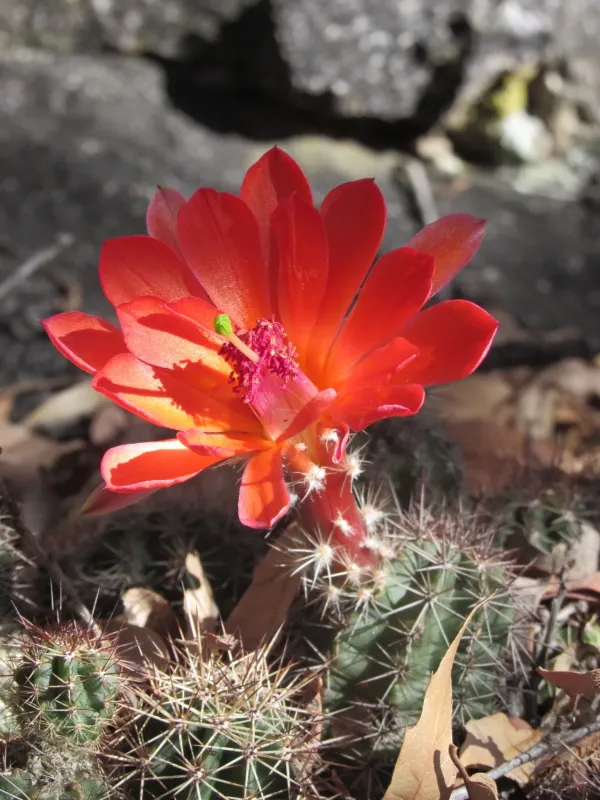
Botanically, the plant is characterized by slender, elongated stems that often branch at the base, creating sprawling clumps over time. The vibrant, funnel-shaped flowers, ranging in color from orange to magenta, represent the main ornamental feature of the species.
Successful cultivation requires high levels of solar radiation, ideally full sun exposure to maintain compact growth. In controlled environments, providing a position with morning light and afternoon shade can prevent epidermal scorching.
The soil requirements are strict: the substrate must be highly mineral, composed of grit, coarse sand, and minimal potting compost. Porosity is the most critical factor to prevent moisture retention near the root system.
Climate management involves a distinct dormant period during winter, with temperatures maintained between 8 and 12 degrees Celsius. During this time, the plant requires near-total dryness to ensure healthy development and subsequent flowering.
Main diseases and pests
The primary pests affecting Echinocereus scheeri are the spider mite, which flourishes in arid, stagnant conditions, and mealybugs, which are notoriously difficult to remove from between the ribs of the plant.
Fungal infections, particularly root and stem rot, represent the most severe threats. These occur predominantly when the plant is exposed to excessive moisture in the substrate during periods of low temperature or insufficient light.
Preventive strategies include utilizing high-quality drainage material at the bottom of the pot and ensuring the growing medium is completely dry before subsequent watering cycles are initiated.
If an infestation is detected, immediate intervention with systemic acaricides or insecticides is necessary to prevent systemic damage to the plant tissue. Care should be taken to test the chemicals on a small area first.
Regular monitoring of the base and root crown is recommended to detect early signs of decay. Prompt removal of damaged tissue followed by localized drying can often save the plant if caught early enough.