
Echinocereus apachensis
Echinocereus apachensis
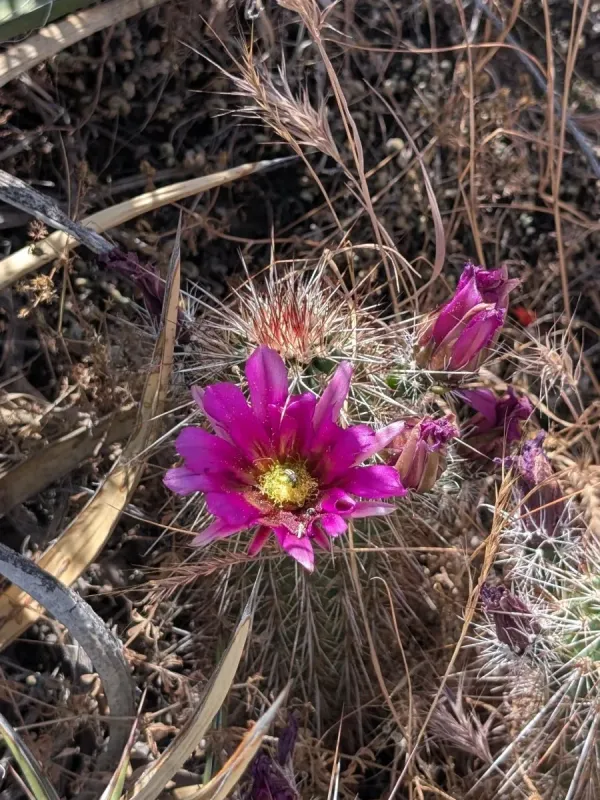
Description
Sowing dates
Sowing seeds of this cactus is best done during the spring season, when daylight hours begin to increase significantly. The optimal time to start is late March or April, which ensures the seedlings get enough natural light for healthy development.
Use light, well-draining substrates based on sand and peat for germination. Cover the containers with glass or plastic to maintain humidity, keeping the temperature between 22–25 degrees Celsius.
Regular but careful ventilation is crucial. This prevents mold growth and ensures the fresh air exchange necessary for the proper development of the young plants' root systems.
Seedlings should be pricked out after the first true spines appear, usually a few months after germination. Move them into individual pots, ensuring a drainage layer is present at the bottom to prevent waterlogging.
Echinocereus apachensis has a slow growth rate, so it is vital to maintain a consistent watering schedule and avoid over-saturating the soil, as this can easily lead to collar rot.
Growing requirements
This species of the Cactaceae family originates from arid zones, resulting in a high demand for bright, direct sunlight. Indoors, it should be placed in south or southeast-facing windows to thrive.
The soil mix should mimic its natural habitat: a slightly acidic or neutral substrate rich in coarse sand and gravel, with minimal organic matter content.
Summer temperatures should reflect its natural environment, though it is quite tolerant of daily temperature fluctuations. Winter is a dormancy period, during which it is ideal to lower temperatures to 10–12 degrees Celsius.
Watering must be strictly controlled; during the active growing season, only water after the soil ball has completely dried out. Excess moisture is highly detrimental to the root system.
This plant thrives in low humidity. Echinocereus apachensis is perfectly adapted to the dry air of apartments and does not require misting or any other moisture-enhancing techniques.
Main diseases and pests
One of the most common issues is infestation by root mealybugs, which are difficult to detect in early stages. These pests live in the root zone, sapping the plant's vitality and stunting its growth.
Overwatering during cooler periods inevitably leads to rot. Fungal infections spread rapidly through the stem, turning internal tissues into soft, decaying matter.
Spider mites can damage the cactus epidermis, especially if the indoor air becomes extremely dry. This usually manifests as brownish or yellowish spots on the stem ribs.
Use systemic insecticides for pest management and broad-spectrum fungicides for rot control. Regular visual inspections are necessary to catch and treat damage to the epidermis early.
Disease prevention relies on strict adherence to watering schedules and using sterilized soil for repotting. Isolating new specimens for a month also helps prevent the spread of pests.