
Echinocereus adustus
Echinocereus adustus
Description
Growing requirements
Echinocereus adustus is a distinct succulent belonging to the Cactaceae family. This species is native to the northern regions of Mexico, where it grows in arid, rocky habitats, perfectly adapted to extreme temperatures and periodic droughts.
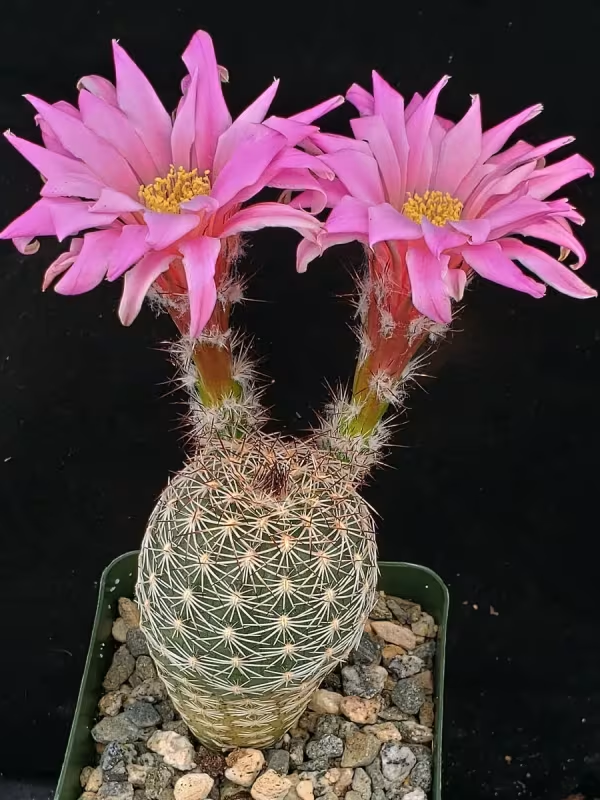
The plant features a globular to short-cylindrical stem with pronounced ribs. It is well-known for its beautiful, dense spines that hug the stem, often displaying shades of tan, brown, or gray, which provide protection from harsh sunlight and herbivores.
Optimal growth requires exposure to direct, bright sunlight. As a desert species, Echinocereus adustus needs a high-light environment to maintain its compact, healthy stem structure and vibrant spine coloration throughout the growing season.
The soil requirement is strict: the substrate must be highly porous and inorganic. A mix composed of coarse sand, pumice, and grit is ideal to ensure that water drains instantly, mimicking the natural mineral-rich desert floor of its native habitat.
During the winter dormancy phase, the plant must be kept in cool conditions with temperatures between 5 and 10 degrees Celsius. Maintaining complete dryness during this period is essential to prevent physiological distress and to trigger flowering in the following spring.
Main diseases and pests
The primary threat to Echinocereus adustus is excessive soil moisture, which inevitably leads to root and stem rot. Proper drainage and infrequent irrigation are the most important practices to keep the plant alive and thriving.
Pests such as spider mites and mealybugs pose a significant risk, especially in environments with poor air circulation. These pests often find refuge within the dense spine clusters, making them difficult to detect at an early stage.
Fungal infections can also occur if the humidity levels remain too high or if the plant remains wet for too long. Improving ventilation and using a grit-heavy top dressing around the base can help prevent these issues.
To manage pest infestations, growers should utilize appropriate systemic insecticides or acaricides. Regular monitoring of the plant’s appearance, specifically checking the stem surface and hidden areas near the base, is a recommended preventative measure.
Maintaining a clean and organized collection, along with avoiding contact between wet soil and the cactus epidermis, significantly reduces the likelihood of plant health complications.