
Echinocereus bristolii
Echinocereus bristolii
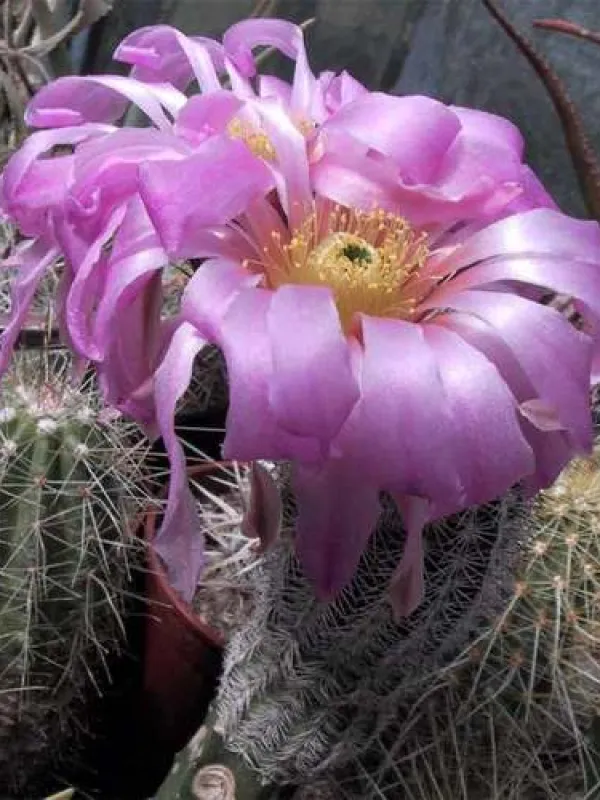
Description
Sowing dates
The propagation of Echinocereus bristolii is primarily carried out through seeds or vegetative offsets. Sowing seeds is best performed during the spring, typically from March to April, as daylight hours begin to increase significantly.
A light, sandy peat substrate should be used for germination, which must be sterilized to prevent fungal diseases in young seedlings. Containers should be covered with transparent film to maintain a greenhouse effect, keeping temperatures around 22–25 degrees Celsius.
Once seedlings emerge, the film should be removed gradually to acclimate the young plants to standard room humidity. It is crucial to ensure bright light conditions while avoiding direct, scorching sunlight on the delicate sprouts.
Pricking out the seedlings should occur after about a year when the plant is sturdy enough for individual pots. Providing a dedicated drainage layer at the bottom of the pot is a critical requirement during this stage.
Vegetative propagation is achieved by separating offsets, which should be dried in a shaded area for a few days before planting in the soil. This method is significantly faster for producing a mature specimen compared to seed cultivation.
Growing requirements
Echinocereus bristolii belongs to the Cactaceae family and originates from the mountainous regions of Sonora, Mexico. In its natural habitat, it thrives in rocky, well-draining soil conditions.
For successful container cultivation, use a substrate consisting of loam, leaf mold, and coarse sand in equal parts. Adding crushed brick or fine gravel is highly recommended to improve root system aeration.
This species is highly demanding regarding intense sunlight. In low-light conditions, the cactus stem tends to etiolate (stretch), losing its natural compact shape and the vibrant coloration of its spines.
During the summer months, water the plant moderately only after the substrate has dried out completely. Winter induces a mandatory dormancy period, during which watering should be almost suspended and temperatures reduced to 8–10 degrees Celsius.
The plant is highly resistant to dry air, so additional misting is unnecessary. Conversely, excessive humidity often triggers rot and fungal pathogens, which can be fatal to the cactus stem.
Main diseases and pests
The most significant threat to this cactus is overwatering, which rapidly leads to root and stem rot. Early symptoms include softening tissues and a distinct change in color to brown or black.
Pests like spider mites can infest the plant if it is kept in poorly ventilated rooms. These mites leave microscopic damage on the epidermis, which significantly detracts from the plant's aesthetic value.
Mealybugs often hide between the ribs and within the areoles, feeding on plant sap. They are easily identified by the characteristic white, fluffy deposits that resemble small cotton tufts.
Prevention involves regular inspection of the plant and strict adherence to the appropriate watering cycle. If pests are detected, treatment with professional-grade insecticides or acaricides is required.
- Root rot due to waterlogging
- Spider mite infestation
- Mealybug outbreaks