
Echinocereus salm-dyckianus
Echinocereus salm-dyckianus
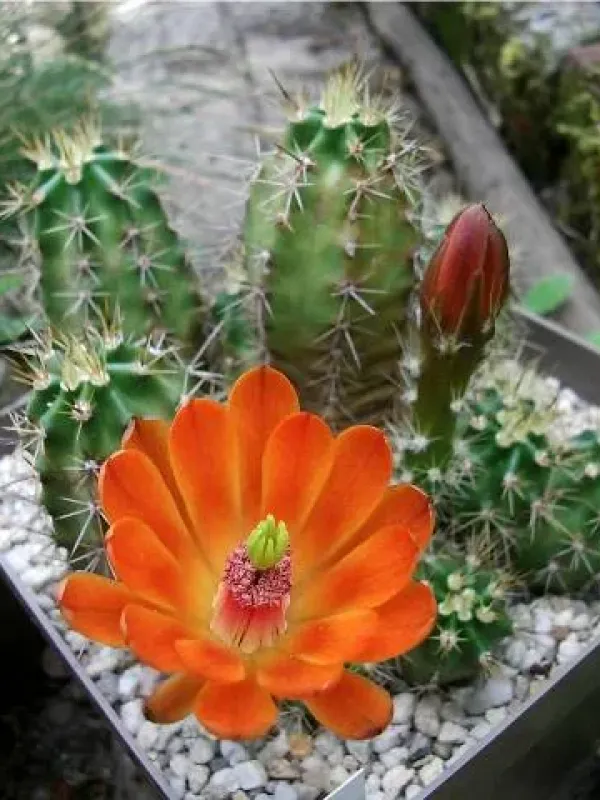
Description
Growing requirements
Echinocereus salm-dyckianus is a distinct species belonging to the Cactaceae family, native to the mountainous regions of Mexico. It is characterized by its clumping habit and attractive, often orange-to-reddish flowers that appear along the stems.
Cultivation requirements demand a highly porous and gritty soil mix. It is essential to use a potting medium composed of pumice, lava rock, and coarse sand to ensure optimal drainage and aeration of the root zone, preventing moisture retention.
This species thrives under intense sunlight and requires high light exposure to maintain its compact growth form. In indoor settings, it should be placed in the brightest window available or under supplemental grow lights to ensure proper stem development.
Regarding irrigation, the "soak and dry" method is strictly advised. During the active growing season, water thoroughly only when the substrate has completely dried out. During the winter dormancy period, watering should be significantly reduced or stopped to prevent decay.
Temperature management is crucial; the plant appreciates warm days and significantly cooler nights. It is hardy enough to withstand mild frost if kept completely dry, but consistent exposure to extreme cold should be avoided in controlled collections.
Main diseases and pests
The primary threat to Echinocereus salm-dyckianus is rot caused by overwatering or poor soil drainage. If the stems become mushy or discolored at the base, immediate repotting into dry, sterile media is required to save the plant.
Common pests include mealybugs and spider mites, which tend to congregate in the areoles or between the ribs of the cactus. These pests can rapidly weaken the plant by feeding on its sap, leading to stunted growth.
For pest control, horticultural oils or systemic insecticides are recommended. Regular visual inspections are vital to detect infestations early before they spread across the entire collection.
Poor ventilation can lead to fungal infections such as botrytis, especially in greenhouses during the humid months. Ensuring a constant airflow around the plant surfaces is a standard preventive agricultural practice.
Always ensure that the pots have ample drainage holes to prevent standing water, as this is the most frequent cause of mortality in cultivated Echinocereus species.