
Echinocereus rigidissimus
Echinocereus rigidissimus
Description
Growing requirements
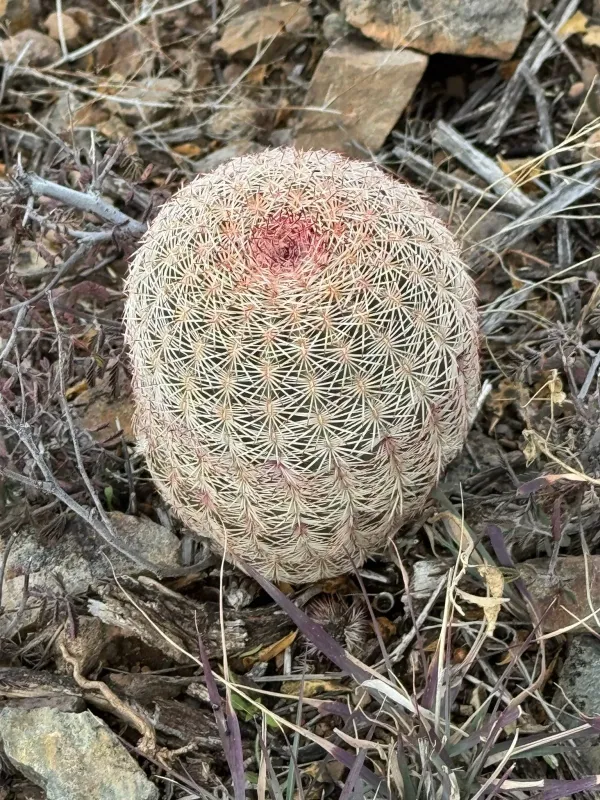
Echinocereus rigidissimus, commonly known as the Rainbow Cactus, is a member of the Cactaceae family. Native to the high deserts of Arizona, New Mexico, and Mexico, this plant is well-adapted to rocky habitats and extreme sunlight exposure.
The plant is distinguished by its cylindrical stem that is densely covered in pectinate spines. These spines are arranged in distinct bands of pink, white, or red, which is why the species is highly prized by collectors for its striking aesthetic appeal.
The cultural requirements are strictly defined by its desert origin. It requires full, unobstructed sunlight for the majority of the day to maintain its natural shape and vibrant spine coloration, which is essential for healthy growth and development.
Soil composition must be highly inorganic and free-draining. A typical mix includes coarse sand, perlite, and small gravel, with a minimal amount of organic compost. This structure ensures that moisture does not remain near the roots for extended periods.
Temperature management is vital. During the active growing season, it thrives in warm temperatures. However, a cooling period during the winter months, with temperatures dropping to 5-10 degrees Celsius, is necessary to induce the resting state and promote flowering in the spring.
Main diseases and pests
The most significant threat to Echinocereus rigidissimus is root rot caused by overwatering. Because the plant has evolved to handle arid conditions, any prolonged moisture in the soil will lead to cellular decay of the roots and the base of the stem.
Spider mites are a persistent pest, particularly during the hot, dry months. They tend to settle in the crevices between the spines, where they sap nutrients from the plant. Regular monitoring and the application of appropriate miticides are required for control.
Mealybugs are another common threat that can quickly infest the cactus. They often hide under the dense spines, making them difficult to detect until the infestation is severe. Spot treatment with isopropyl alcohol or systematic insecticides is effective if applied early.
Root mealybugs live underground and can go unnoticed until the plant begins to show signs of decline, such as a lack of growth or skin shriveling. When repotting, it is crucial to inspect the root ball for any evidence of these pests and treat the roots thoroughly.
Fungal infections, such as Fusarium wilt, may occur if airflow is poor. Maintaining consistent air circulation around the plant is the primary defensive measure. In cases of localized infection, immediate surgery to remove affected tissue and the application of fungicides are recommended.