
Echinocereus primolanatus
Echinocereus primolanatus
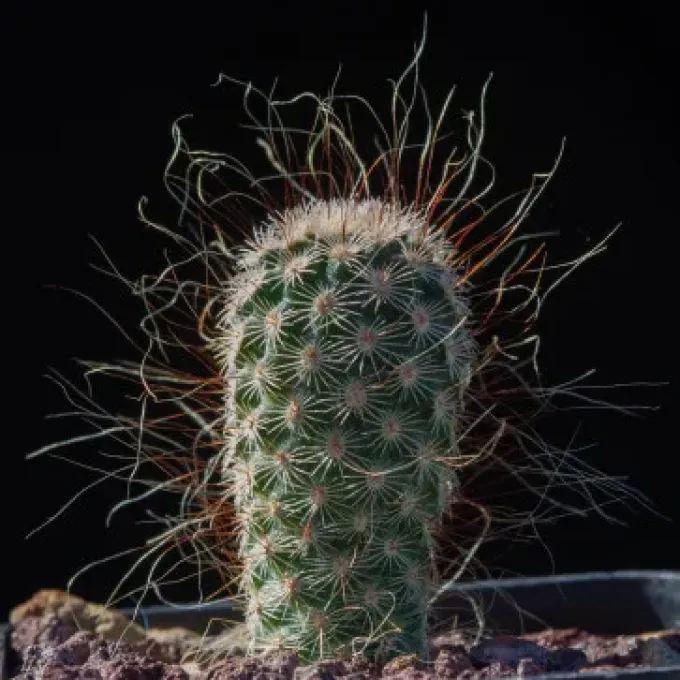
Description
Sowing dates
Propagation of Echinocereus primolanatus by seeds is preferably carried out in the spring, from March to May, as daylight hours begin to increase significantly.
Seeds are sown in a sterile, light substrate consisting of a mixture of sand and turf soil, maintaining the germination temperature at 22-25 degrees Celsius.
For successful seed germination, it is critical to ensure high air humidity in mini-greenhouses and regular ventilation of the sowing container to prevent rot processes.
Young seedlings require gradual adaptation to the dry air of the room, which is carried out by slowly removing the protective glass or film over several weeks.
Pricking out of grown plants is carried out no earlier than a year after sowing, using a substrate with a low organic matter content to build a strong root system.
Growing requirements
The crop belongs to the Cactaceae family and naturally grows in the harsh desert conditions of Mexico, where significant daily temperature fluctuations occur.
For optimal development, the plant requires maximum intense sunlight, as in the shade, the Echinocereus quickly deforms, stretches, and loses its aesthetic appeal.
The soil must have a strictly mineral composition with excellent drainage properties, preventing moisture stagnation even for a short period of time.
During the active growing season, watering should be moderate and strictly applied only after the soil ball has dried completely to avoid root rot typical for this species.
The winter dormancy of the culture should occur at reduced temperatures between 5 and 10 degrees Celsius in a completely dry substrate, which is a prerequisite for quality flowering.
Main diseases and pests
The most dangerous pest for the Echinocereus is the root mealybug, which affects the root system and can lead to plant death if not detected in a timely manner.
When ventilation is poor or air humidity is excessive, the cactus often becomes a target for spider mites, which leave characteristic light spots on the stem.
Fungal diseases, such as Fusarium wilt, occur when high soil moisture combines with low temperatures, requiring the application of fungicide preparations at early stages.
Improper watering provokes bacterial rot, which is capable of completely destroying the succulent's internal tissues in a short time, making it untreatable.
To prevent infestations, it is recommended to conduct regular inspections of the root zone and stem, and to use only disinfected soil during transplantation.