
Echinocereus pectinatus
Echinocereus pectinatus
Description
Sowing dates
Sowing seeds of Echinocereus pectinatus is best performed in early spring to utilize the increasing light levels. Proper timing ensures that seedlings grow vigorously before entering their first dormant period in the winter.
The substrate for sowing should be extremely well-draining, consisting of coarse sand, pumice, and a small amount of peat. Sterilization of the soil mixture is strongly recommended to prevent damping-off disease which can decimate new cohorts.
Seeds should be pressed gently onto the moist soil surface without covering them with too much substrate. A clear plastic or glass cover is necessary to maintain high ambient humidity during the germination phase, which typically takes two to four weeks.
Once seedlings emerge, ventilation must be gradually increased to prevent fungal growth. Keeping the seedlings in a bright location without direct, harsh noon sun is critical for developing robust tissues during the first few months of life.
Pricking out the seedlings into individual small containers is done once they develop sufficient spines. Handle them with extreme care to protect the developing root structure, which is sensitive to mechanical stress during the early growth stages.
Growing requirements
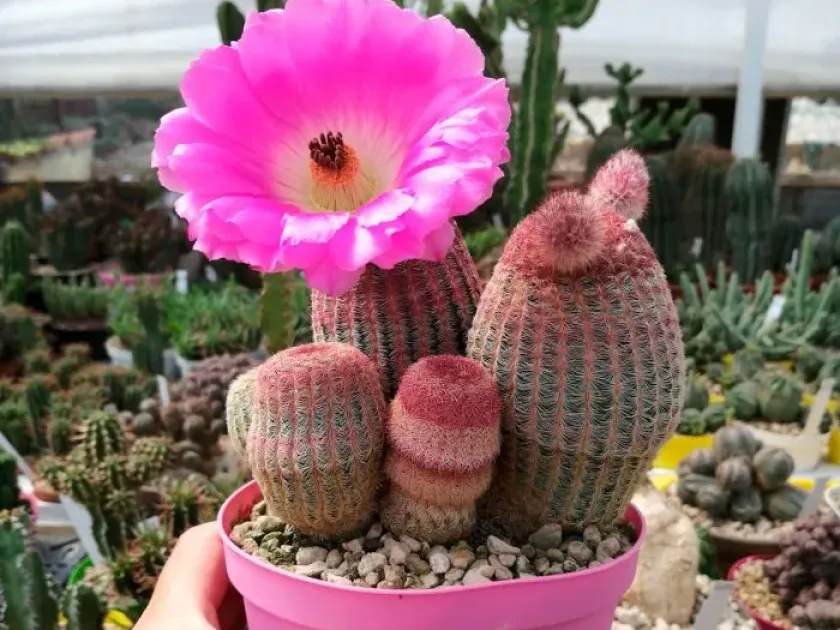
Echinocereus pectinatus, belonging to the Cactaceae family, is native to the arid regions of northern Mexico and the southwestern United States. It requires high light intensity to maintain its characteristic compact, cylindrical shape and dense, comb-like spine formation.
The soil must be inorganic-based, specifically formulated for succulents. Poor drainage is the most significant factor leading to plant mortality, so the presence of gravel, perlite, or pumice in the mix is essential for aeration.
The climate requirements involve a distinct cycle of growth and rest. During the growing season, warm daytime temperatures with cooler nights are preferred. Conversely, the dormant period requires dry, cool conditions to simulate natural winter cycles.
Watering practices should follow the soak-and-dry method. Ensure that the soil is completely dry before applying water again, as the roots are highly prone to rotting if they remain in constant contact with moisture for extended periods.
Regular fertilization is not mandatory but can be done sparingly with a low-nitrogen, high-potassium formula during the spring. This encourages blooming, for which this species is highly valued in botanical collections.
Main diseases and pests
Root rot is the primary threat to Echinocereus pectinatus, usually caused by overwatering or poor soil quality. Once rot has reached the stem, it is often too late to save the plant, highlighting the importance of preventative measures.
Mealybugs are common pests that lodge themselves between the pectinate spines. Because of the density of these spines, these insects can be difficult to eradicate without the use of systemic insecticides or targeted manual removal.
Spider mites can become an issue when the surrounding air is excessively dry and lacks movement. They pierce the epidermis to extract fluids, which leaves behind discolored patches and weakens the cactus overall.
Scale insects can also infest this species, appearing as small, hard brown bumps on the skin. Regular monitoring and the application of contact-based or systemic treatments are required to keep the infestation from spreading.
To ensure long-term health, maintain excellent hygiene in the cultivation area. Remove any debris, provide adequate spacing between pots to ensure airflow, and isolate any suspected infested plants immediately.