
Echinocereus grandis
Echinocereus grandis
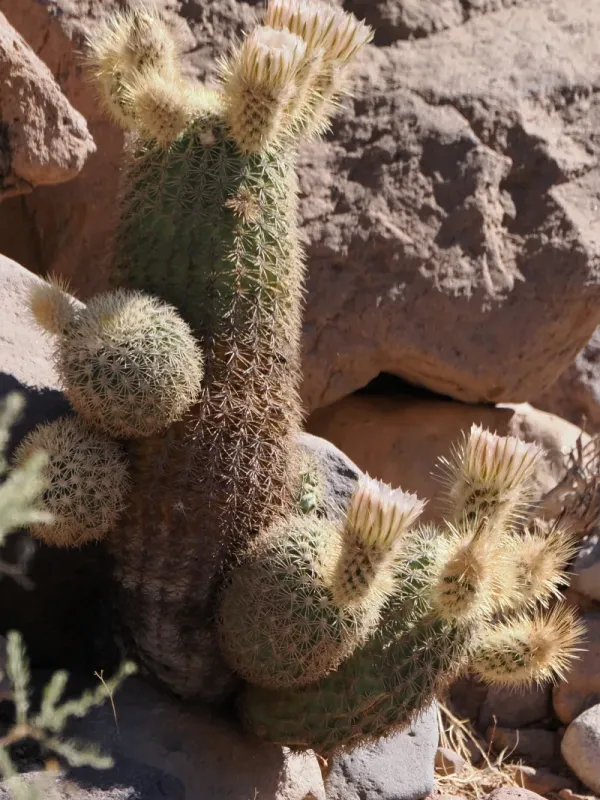
Description
Growing requirements
Echinocereus grandis is a prominent succulent species within the Cactaceae family, naturally occurring on the islands of the Gulf of California, Mexico. It is highly adapted to arid, rocky environments where exposure to direct sunlight is constant.
Botanically, this species is characterized by its robust, cylindrical stems which can grow into large, impressive clusters over several years. The surface is heavily armed with sturdy spines that serve as a defense mechanism against local herbivores.
The culture requires high levels of light intensity to maintain its natural growth habit. In indoor cultivation, providing access to a south-facing window or supplemental lighting is essential to prevent etiolation.
Soil requirements are strict, focusing on mineral content and drainage capacity. The ideal medium is a porous, inorganic mix composed of pumice, coarse sand, and a minimal amount of desert soil to allow rapid water runoff.
Agronomic management relies on a distinct seasonal cycle. During the active growing period, moderate watering is required, while winter dormancy demands complete dryness and cool temperatures to mimic natural conditions.
Main diseases and pests
The primary threat to the health of Echinocereus grandis is root rot triggered by improper irrigation schedules. Excess moisture in the root zone quickly compromises the plant's vascular system.
Mealybugs are a persistent pest that favors the protected areas between the ribs and spines of the plant. Early detection and treatment with specialized contact or systemic insecticides are highly recommended.
Spider mites can also attack the epidermis during periods of low humidity. These pests feed on plant juices, leaving unsightly scarring that can open entry points for opportunistic fungal pathogens.
Fungal infections, often manifested as dark spots or soft tissue decay, develop rapidly when ventilation is inadequate. Ensuring constant airflow around the plant helps to mitigate this risk significantly.
Root aphids pose a hidden danger, often surviving in the substrate for long periods. Standard protocols involve regular repotting and treating the root ball with protective chemicals to ensure the long-term viability of the crop.