
Fendler's hedgehog cactus
Echinocereus fendleri
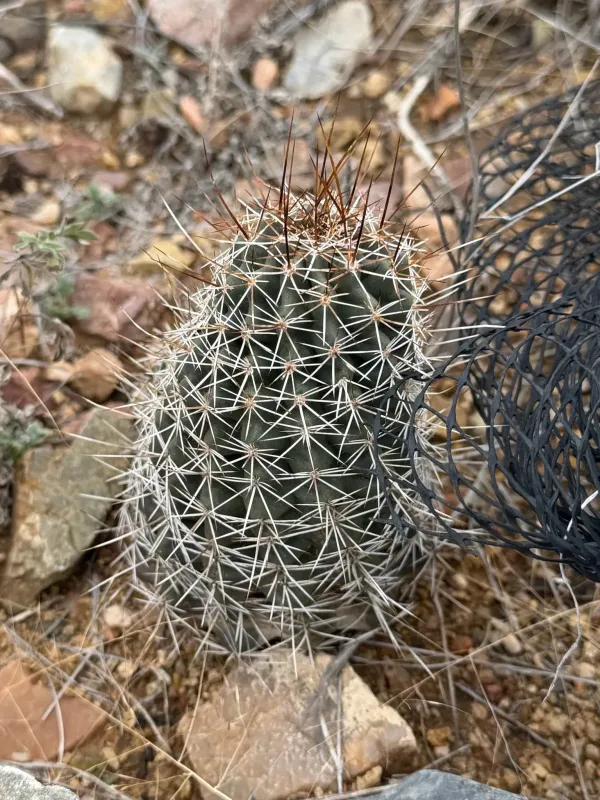
Description
Growing requirements
Echinocereus fendleri, known as Fendler's hedgehog cactus, is a species within the Cactaceae family native to the arid regions of the southwestern United States and northern Mexico. It is a highly resilient desert plant adapted to harsh environmental conditions.
The plant typically grows as a small, clustered cactus with cylindrical stems characterized by prominent ribs. Its long, often curved spines serve as an evolutionary mechanism to shade the plant body and protect it from predators in its natural habitat.
Successful cultivation requires intense sunlight exposure to maintain the plant's robust structure and encourage flowering. Providing full sun is essential for the plant to thrive, as it naturally occurs in open, exposed desert landscapes.
The soil must be exceptionally well-draining, consisting primarily of mineral substrates like coarse sand, gravel, and perlite. Using standard organic potting soil is highly discouraged, as it retains too much moisture and inevitably leads to root rot.
Watering practices are critical: allow the soil to dry out completely between sessions. During the dormant winter phase, keep the plant entirely dry and cool, as this chilling period is necessary for the following season's blooming cycle.
Main diseases and pests
The most common cause of mortality in Echinocereus fendleri is overwatering. Excessive moisture in the growing medium creates a perfect environment for root-rotting fungi, which can destroy the root system within days.
Mealybugs are the primary pest concern for this species. They often hide between the ribs and the base of the spines, making them difficult to detect until the infestation is significant enough to hinder growth.
Spider mites can also become a problem if the ambient air is excessively hot and stagnant. Maintaining good airflow around the plants helps prevent mite outbreaks and promotes general plant health.
Fungal pathogens may invade if the plant has previously suffered from mechanical damage or improper hydration. Using sterile tools during maintenance is recommended to prevent the spread of infections.
Vigilance is required to ensure that water does not pool in the crevices of the cactus, as this can lead to soft rot patches. Ensuring a dry environment is the most effective preventative measure against these threats.