
Singapore durian
Durio singaporensis
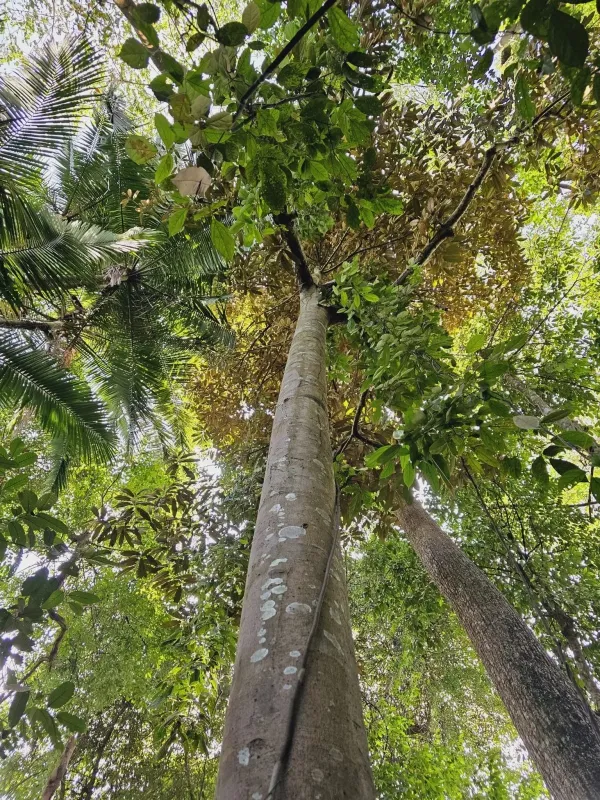
Description
Growing requirements
The Singapore durian (Durio singaporensis) is a tropical evergreen tree belonging to the Malvaceae family. Native to the dense, humid rainforests of the Malay Peninsula and Singapore, this species is well-adapted to the high-temperature, high-humidity environments typical of equatorial regions.
To thrive, the plant requires a strictly tropical climate with consistent temperatures ranging from 24°C to 32°C throughout the year. It possesses no tolerance for frost or cool periods, and its growth will stall if temperatures drop significantly, leading to stress that predisposes the tree to various physiological disorders.
Soil requirements are quite specific, favoring deep, well-draining, and nutrient-rich soils. While it thrives in organic-rich forest soils, it cannot tolerate waterlogged conditions. Proper site selection must ensure that the groundwater table does not sit too close to the surface, as anaerobic conditions lead to root rot.
High relative humidity, ideally between 80% and 90%, is critical for its development. In managed orchards, supplemental irrigation is essential during any dry spells to maintain soil moisture, although care must be taken to avoid oversaturation, which remains the primary cause of plant failure in non-native climates.
The economic utility of the Singapore durian is primarily centered around its edible fruit, which serves as a seasonal delicacy in its native range. Furthermore, the tree contributes to the biodiversity of tropical forest ecosystems, providing habitat and forage for local wildlife, which emphasizes the importance of preserving wild groves.
Main diseases and pests
The most devastating threat to Durio singaporensis is Phytophthora root rot, a fungal pathogen that attacks the vascular system. Once established, this disease causes rapid decline and death of the tree, making prevention through strict sanitation and drainage management the only effective defense strategy.
Various insect pests, including bark borers and fruit-boring caterpillars, pose a significant risk to productivity. These insects can compromise the structural integrity of the branches and ruin the quality of the harvest, necessitating regular monitoring and integrated pest management programs to keep their populations in check.
Foliar diseases, such as leaf blight and anthracnose, are common in regions with poor air circulation and excessive moisture. These diseases manifest as necrotic spotting on the foliage, reducing the photosynthetic capacity of the tree and ultimately leading to premature leaf drop and stunted growth.
Soil-borne nematodes can impede root development, especially in young saplings, making them more susceptible to drought and nutrient deficiencies. To mitigate this risk, it is recommended to use sterile potting media for nursery stock and ensure healthy soil microbiology through the application of compost.
Weed infestation in the orchard floor competes directly with the durian trees for moisture and nutrients while creating a microclimate favorable to fungal pathogens. Maintaining a clean, mulched circle around the base of the tree is a standard and highly effective practice for orchard maintenance.