
Kutai durian
Durio kutejensis
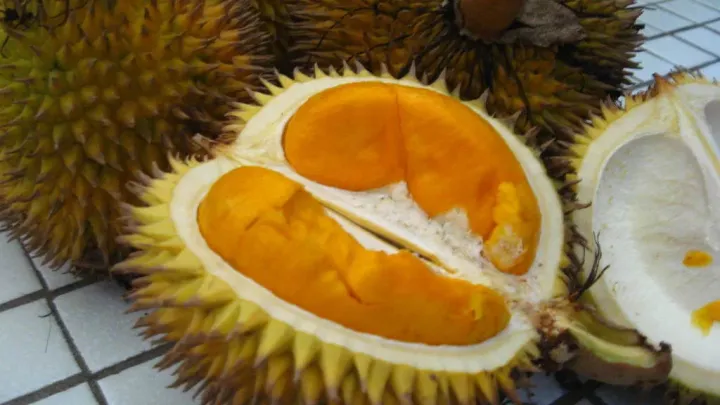
Description
Growing requirements
Kutai durian (Durio kutejensis) is a tropical fruit tree belonging to the Malvaceae family. Native to the island of Borneo, this species thrives in humid tropical rainforest environments, requiring consistent heat and high humidity throughout the entire growing cycle.
The tree demands a tropical climate with temperatures strictly between 24°C and 30°C. It is extremely sensitive to cold snaps and cannot tolerate temperatures near or below 15°C, which can cause significant physiological stress or plant death.
Soil requirements are quite specific: the tree needs deep, fertile, well-drained loamy soils. It cannot survive in waterlogged conditions, making proper land preparation and drainage systems absolutely essential for a healthy orchard.
Proper light management is crucial for young seedlings, which require partial shade to mimic the forest floor environment. As the tree matures, it requires full sunlight to ensure maximum flowering and fruit production.
Agricultural management also includes regular organic mulching. This practice helps maintain soil moisture levels and protects the superficial root system from high soil temperatures common in tropical zones.
Yield
The fruit of the Kutai durian is highly prized for its bright yellow to orange flesh, which is characterized by a smoother, more custard-like texture than the more common Durio zibethinus. Its aroma is less pungent, making it increasingly popular among consumers.
Yield capacity is influenced by tree maturity, soil fertility, and adequate moisture levels. Mature trees can produce a substantial crop once they reach reproductive age, usually after several years of careful growth.
The fruit is mainly consumed fresh but serves as a base for various traditional culinary products, including local sweets and fermented fruit pastes. This makes it a valuable commercial crop for small-scale tropical fruit farmers.
Harvesting is labor-intensive and requires precision, as the fruit must be gathered when mature but before it hits the ground. Harvesters typically wear protective gear due to the long, sharp thorns covering the fruit husks.
Market trends show a growing interest in diverse durian species. Because of its unique color and mild taste, Kutai durian commands a premium price in local markets, enhancing the economic viability of its cultivation.
Main diseases and pests
Root rot, primarily caused by Phytophthora species, remains the most significant threat to Kutai durian plantations. This pathogen thrives in overly wet, stagnant soils and can destroy an entire orchard if not caught in its early stages.
Pests, such as various species of stem borers and fruit flies, can cause severe damage. Fruit flies are particularly problematic as they lay eggs in the developing fruit, leading to premature rot and significant crop losses.
Fungal leaf diseases are common during prolonged rainy seasons. High humidity promotes mold growth on the foliage, which reduces the tree’s photosynthetic efficiency; therefore, maintaining good air circulation within the canopy is vital.
Vertebrate pests, including squirrels, monkeys, and wild pigs, represent a constant threat to ripening fruits. Farmers often employ physical netting or specialized fencing to protect their trees from these nocturnal and diurnal raiders.
Integrated Pest Management (IPM) strategies, which include regular orchard monitoring and the use of pheromone traps, are highly recommended to keep pest populations under control without relying solely on chemical treatments.