
Durio graveolens
Durio graveolens
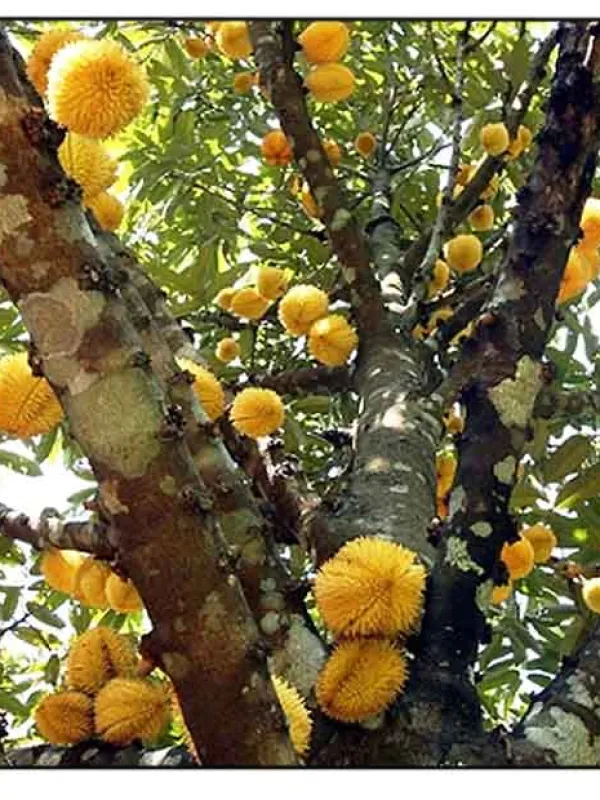
Description
Sowing dates
Propagation of Durio graveolens is primarily achieved through seeds, which must be planted immediately after extraction due to their extremely short shelf life. For commercial plantations, grafting onto resistant rootstocks is preferred to ensure consistent fruit quality and faster tree development.
Seeds are sown in well-draining, nutrient-rich potting media. Maintaining high moisture levels and warm temperatures is critical to achieving successful germination rates, as the embryo is sensitive to drying out.
The ideal time for field transplanting is the start of the monsoon season, providing young saplings with the hydration necessary to establish a robust root system. Spacing should be approximately 10 to 12 meters apart to accommodate the large canopy of mature trees.
Young plants require significant shade during their initial development phases to prevent leaf scorch. This protection is gradually reduced as the tree grows and its canopy becomes capable of regulating its own microclimate.
Professional agronomic care includes regular soil pH monitoring and the application of balanced nutrients. Successful establishment depends on protecting the root zone from mechanical injury and compaction during the early stages of growth.
Growing requirements
Durio graveolens is a tropical species belonging to the Malvaceae family, thriving best in humid, lowland rainforest conditions. Consistent temperatures ranging between 25 and 30 degrees Celsius are required for optimal physiological function.
The plant demands high relative humidity, ideally above 80 percent, which is characteristic of its native range in Southeast Asia. It is highly intolerant of cold spells, drought, and strong, dry winds that can damage the leaf structure.
Soil quality is a major factor in productivity, necessitating deep, fertile, and well-drained alluvial or loamy soils. The presence of a high water table or poor drainage leads to inevitable root decay, making soil preparation the most vital step in site selection.
Annual rainfall requirements range between 2000 and 3000 millimeters, with a short dry period often serving as a trigger for synchronized flowering. Irrigation systems are essential in areas with irregular precipitation patterns.
Organic fertilization, particularly the incorporation of mature compost, helps maintain soil structure and promotes healthy microbial activity. Nitrogen applications should be carefully managed to avoid excessive vegetative growth at the expense of reproductive output.
Yield
The tree exhibits a long juvenile stage, typically requiring 6 to 10 years before the first commercial harvest is possible. Once established, it is a long-lived species that can produce substantial yields for many decades.
Average yield for a mature, healthy tree ranges from 50 to 150 fruits per season. Productivity is heavily dependent on the effectiveness of natural pollinators, primarily nocturnal animals and large insects that move between the fragrant blossoms.
The fruit of Durio graveolens is characterized by a unique, less pungent aroma than other popular species and a buttery, creamy texture. The thorny husk serves as a natural defensive mechanism against pests during the development phase.
Harvesting strategies involve monitoring the skin color and the fruit’s tendency to fall naturally when reaching maturity. Because fruits are perishable, precision in harvest timing is essential for maintaining post-harvest quality.
Yield stability is strongly correlated with the quality of orchard management and the presence of pollinator-friendly habitats around the plantation. Consistent care leads to higher fruit weight and better flesh-to-seed ratios.
Main diseases and pests
Phytophthora palmivora remains the most significant disease threat to Durio graveolens, causing severe root and trunk rot. This pathogen thrives in waterlogged soils, making effective drainage the primary preventative strategy.
Pest management focuses on controlling fruit-boring larvae and various beetle species that damage both foliage and fruit. Infestations can lead to secondary fungal infections that rapidly degrade the tree's health.
- Phytophthora root rot.
- Fruit-boring larvae.
- Leaf-eating beetles.
- Root-knot nematodes in sandy soils.
- Scale insects causing sap depletion.
Integrated Pest Management (IPM) is highly recommended, utilizing biological control agents and targeted applications of systemic fungicides. Regular pruning of dead or infected branches improves airflow and reduces the risk of fungal spread.
Monitoring the tree's bark for lesions is crucial for early detection of trunk rot. Quick intervention with approved wound dressings can often save the tree if the infection is identified in its early stages.
Harvesting
Harvesting requires protective equipment to handle the sharp husks safely. Fruits are typically collected manually or caught in nets if the tree is particularly tall, ensuring they do not strike the ground and split.
Post-harvest handling involves cleaning the fruits and sorting them by size and ripeness. Proper ventilation during transport is necessary to keep the fruit cool and prevent rapid fermentation of the sugars inside.
The flesh is widely used in both fresh markets and food processing for traditional sweets, pastes, and frozen treats. Advances in sub-zero storage technologies have allowed for better supply chain management of the product.
Seeds harvested during processing must be kept moist if intended for further propagation, as they quickly lose viability upon dehydration. They can also be consumed after roasting or boiling, adding secondary economic value to the crop.
Timely distribution is paramount given the high moisture content and sugar levels of the fruit. Successful market entry relies on cold-chain infrastructure to ensure the fruit reaches the consumer in optimal condition.