
Durian excelsus
Durio excelsus
Description
Sowing dates
Propagation of Durian excelsus is primarily achieved through seeds, although they exhibit short viability and must be planted immediately after extraction from the fruit.
In commercial nurseries, vegetative propagation through grafting is the preferred method to maintain desirable phenotypic traits and accelerate the time to fruit-bearing.
Seed sowing should coincide with the onset of the rainy season to provide the necessary ambient moisture for successful root development in open soil.
Seeds are typically sown in a lightweight, well-draining medium at a shallow depth of 2-3 cm, maintaining stable temperatures between +25°C and +30°C.
Seedlings require shaded conditions during the early stages of establishment to prevent leaf scorching and desiccation caused by intense tropical sunlight.
Growing requirements
Durian excelsus is endemic to the tropical regions of Borneo and thrives under conditions characterized by consistently high humidity and warm temperatures.
The tree requires an optimal temperature range of +24°C to +32°C year-round, as it is highly sensitive to cold snaps and lacks tolerance for frost.
Soil selection is critical; the tree prefers fertile, organic-rich substrates with a pH level between 5.5 and 6.5, providing ample nutrients for growth.
Effective drainage is non-negotiable, as waterlogged conditions pose a severe risk to the root system, often leading to rapid decline and fungal infections.
High annual rainfall or supplementary irrigation is necessary to support the vigorous vegetative growth and the development of reproductive organs.
Yield
The time from planting to the first harvest is notably long, typically ranging from 7 to 10 years, depending on the propagation method and local microclimate.
Fruit yield is heavily influenced by the efficiency of pollinators, specifically bats and insects, which are crucial for the fertilization of the flowers.
A mature tree, when managed under ideal conditions, can produce between 50 and 150 fruits per season, showcasing high productive potential in suitable areas.
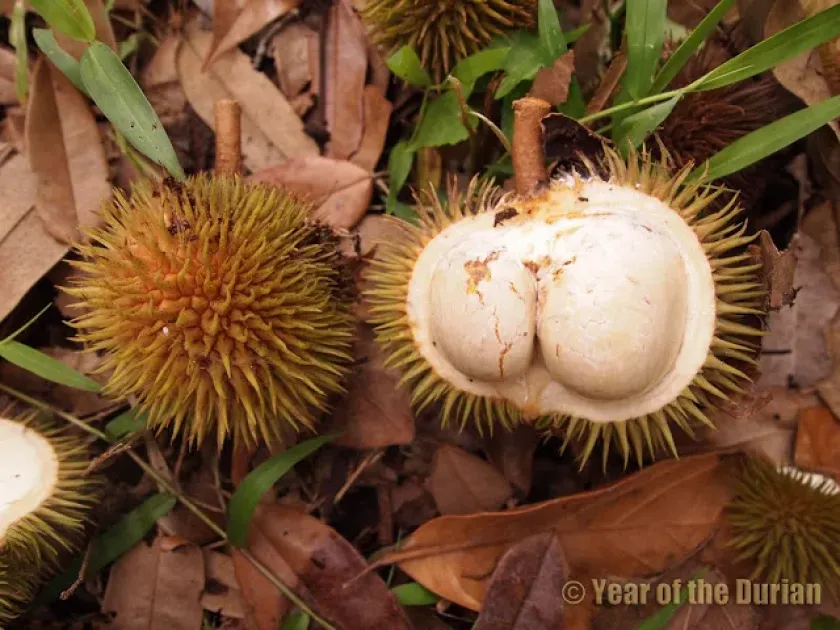
The fruits exhibit specific botanical traits, including a spiky exterior and a unique aromatic profile, which are characteristic of the Durio genus.
Consistent fertilizer application, focusing on potassium and essential micronutrients, significantly improves both the size and the flavor quality of the harvested fruit.
Main diseases and pests
Root rot caused by Phytophthora species is the most significant pathological threat to Durian excelsus, often exacerbated by poor drainage and excessive irrigation.
Various leaf-eating insects and stem borers can impact tree health, necessitating a regular monitoring schedule to prevent severe infestations.
Fruit flies pose a risk to the maturing crop, making the use of integrated pest management strategies, such as traps, an essential part of farm operations.
Fungal leaf diseases often proliferate in poorly ventilated canopy areas, emphasizing the importance of proper spacing and periodic sanitary pruning.
Enhancing tree vigor through balanced nutrition and maintaining optimal soil structure are the most effective ways to bolster natural resistance against common pests.
Harvesting
Harvesting is a delicate operation as fruits ripen asynchronously and detach naturally when reaching maturity, dropping onto the forest or orchard floor.
To mitigate impact damage, growers often deploy protective nets beneath the tree canopy, ensuring that the fruit remains intact upon landing.
Maturity is identified by sensory cues, including the intensification of the characteristic odor, color shifts in the husk, and auditory feedback from tapping.
Careful post-harvest handling is required to maintain the integrity of the delicate pulp, which is highly perishable and susceptible to physical trauma.
The window for commercialization is narrow, requiring a streamlined logistics chain to ensure that the produce reaches the market in peak condition.