
Durio acutifolius
Durio acutifolius
Description
Growing requirements
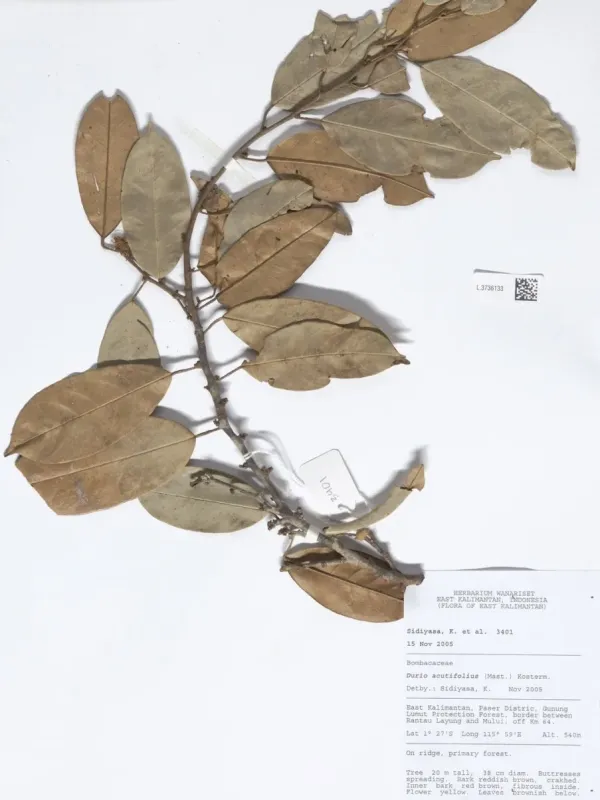
Durio acutifolius is a distinctive tropical tree belonging to the Malvaceae family. Native primarily to the lowland rainforests of Borneo, it represents a specialized species adapted to stable equatorial environments.
The cultivation of this plant requires a consistent tropical climate with temperatures ranging from 24 °C to 30 °C. It is highly sensitive to cold, wind, and prolonged periods of drought, which can significantly inhibit its growth and flowering processes.
Soil requirements for optimal development include well-drained, nutrient-rich loams with high organic matter content. Ensuring excellent water drainage is mandatory, as this species, while moisture-loving, cannot tolerate waterlogged soils that cause root decay.
Agricultural management involves regular mulching to maintain soil humidity and moderate soil temperature. As a lower-canopy species in nature, young trees require shaded environments, receiving protection from direct, intense sunlight during their early development stages.
Economically, the species is primarily utilized for its fruit, which is harvested for local consumption. Furthermore, the wood is occasionally used in regional construction and traditional crafting due to its structural properties.
Main diseases and pests
The primary threat to Durio acutifolius plantations is root rot, typically caused by Phytophthora species. This disease thrives in areas with poor drainage and excessive irrigation, leading to rapid plant decline.
Stem-boring insects present a continuous risk, as they tunnel into the bark and wood, weakening the tree's vascular system and making it susceptible to secondary infections by bacteria and viruses.
Foliage-feeding insects and caterpillars can cause significant defoliation, particularly in young seedlings, thereby reducing the photosynthetic efficiency and overall growth rate of the plant.
Fruit-rotting fungi represent a seasonal hazard, especially in high-humidity conditions during the ripening phase, which can compromise the quality of the harvested produce.
Effective management strategies include the implementation of rigorous drainage systems, regular monitoring for signs of infestation, and the use of integrated pest control methods to maintain plantation health.