
Durio dulcis
Durio dulcis
Description
Growing requirements
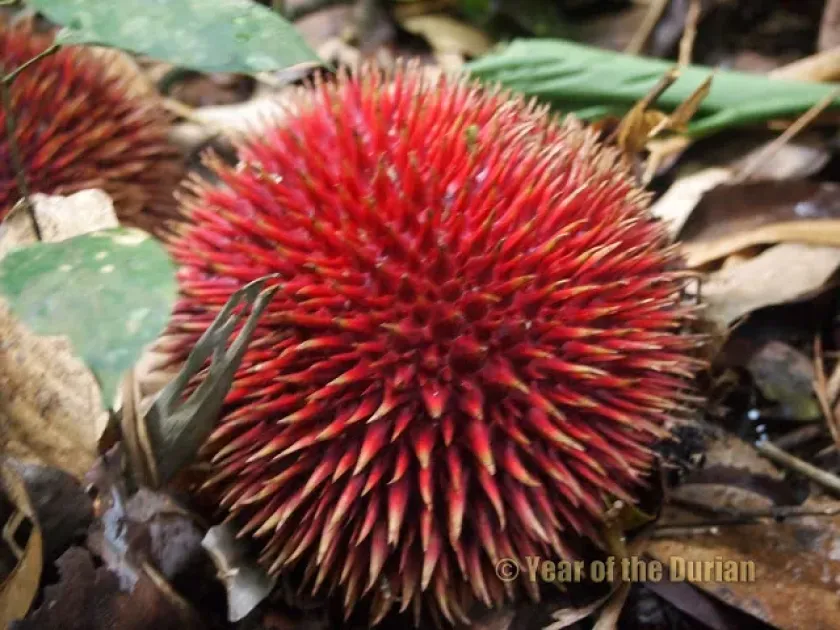
Durio dulcis, commonly known as the sweet durian, is a large evergreen tree native to the rainforests of Borneo. Belonging to the Malvaceae family, it is highly valued for its dark red, sweet-tasting flesh and distinct sensory profile compared to other durian species.
The tree requires a humid, tropical environment with high and consistent rainfall throughout the year. It thrives in locations with temperatures between 24 °C and 30 °C, and it is highly intolerant of cold snaps or prolonged dry spells that can damage sensitive vegetative tissues.
Soil requirements for Durio dulcis include deep, well-draining, and nutrient-rich substrates. Loamy soils with high organic matter content are ideal, provided they offer excellent aeration. Poorly drained soil, especially in low-lying areas, leads to rapid root system failure.
In terms of agricultural management, young saplings require partial shading to simulate the understory conditions of their natural habitat. As they mature, they need significant space due to their large size, making intensive monoculture challenging for smallholder farmers.
Proper cultivation involves careful weed management and the application of organic mulch to preserve soil moisture and regulate temperature around the root zone. Regular monitoring of soil pH is also crucial to ensure the availability of essential micronutrients for the tree.
Yield
The productive cycle of the sweet durian typically begins after 7 to 10 years of growth. Yield consistency is heavily dependent on the tree's health, pollination success, and the availability of water during the transition from flowering to fruit development.
Each tree produces numerous heavy, spiky fruits that turn dark brown upon reaching maturity. A single mature specimen can yield significant quantities of fruit, though production is often seasonal and concentrated during specific periods of the year.
Harvesting is labor-intensive, often requiring manual monitoring of fruit development to ensure the perfect stage of ripeness. Fruits that drop naturally can be damaged; therefore, controlled harvesting just before complete ripening is a preferred commercial practice.
Post-harvest handling is critical because the fruit has a limited shelf life and is prone to rapid fermentation. Market distribution is usually localized, with high demand for the unique, butter-textured, and intensely flavored red pulp.
To improve yield, agriculturalists focus on optimizing nutrient delivery through drip irrigation systems. This ensures that the trees receive a steady supply of nitrogen, phosphorus, and potassium, which are vital for fruit size and overall quality.
Main diseases and pests
The most devastating threat to Durio dulcis is root rot, primarily caused by Phytophthora species. This soil-borne pathogen thrives in wet conditions and can destroy a tree's vascular system, necessitating strict drainage control and site hygiene.
Various insects, including fruit borers and beetles, pose significant risks by damaging developing fruits and foliage. Integrated pest management (IPM) strategies, including the use of biological control agents and pheromone traps, are essential for mitigation.
Nutritional deficiencies often manifest as chlorosis or stunted growth, particularly in plantations established on depleted soils. Routine leaf tissue analysis is recommended to determine the necessary fertilization adjustments for sustained plant vigor.
Competition from fast-growing invasive weeds can suppress young tree development, depriving them of light and nutrients. Keeping the orchard floor clean through non-chemical manual weeding helps promote a healthy growth environment.
Proper canopy management and pruning are necessary to maintain airflow, which helps reduce the risk of fungal leaf spots and blights. Open canopies prevent the accumulation of excess humidity, keeping the internal orchard environment stable.