
Durio oxleyanus
Durio oxleyanus
Description
Growing requirements
Durio oxleyanus is a notable member of the Malvaceae family, widely recognized for its botanical significance in tropical ecosystems. This evergreen tree can grow to an impressive height of 40 meters, characterized by its sturdy trunk and deep root system that anchors it firmly in the nutrient-rich soils of the tropical rainforest.
The climate requirements for this species are strict, demanding high humidity and year-round warmth. It thrives in regions where the average daily temperature remains between 24 and 32 degrees Celsius, with no significant drought periods. Any deviation into cooler temperatures can cause severe stress to the growth cycles of the tree.
Soil quality is paramount for the healthy development of Durio oxleyanus. It prefers deep, well-draining soils with a slightly acidic profile. Because the tree is susceptible to root rot, any form of waterlogging in the root zone must be mitigated through site selection or artificial land leveling and drainage systems.
The botanical uniqueness of the tree lies in its leaves, which feature a distinct golden-copper pubescence on the underside. This layer of trichomes serves as an evolutionary adaptation, protecting the leaf surface from excessive transpiration in the intense heat of the equatorial sun, while also regulating local humidity around the foliage.
Propagation is primarily achieved through seeds, although this poses challenges for maintaining uniform tree characteristics. Growers often select seeds from the healthiest, most vigorous parent trees to ensure that the offspring exhibit similar structural integrity and resistance to common environmental stressors found in the native range.
Harvesting
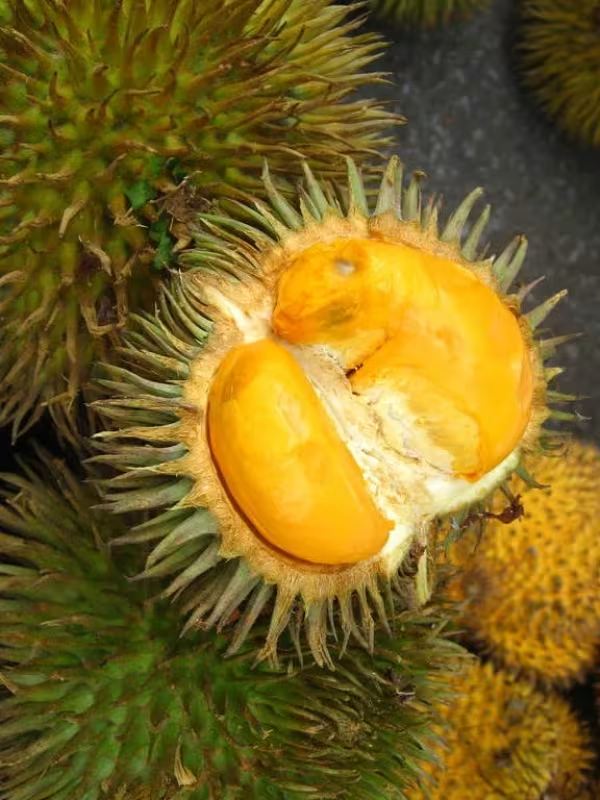
The fruits of Durio oxleyanus are spherical and protected by a robust outer shell covered in sharp, prominent spines. This defensive armor is highly effective against herbivores, ensuring that the seeds remain protected until the fruit reaches the peak of its maturity and undergoes the natural abscission process.
Upon ripening, the fruit reveals a creamy, nutrient-dense pulp that is highly prized for its flavor profile. It is often described as having a rich, nutty sweetness that distinguishes it from other common durian varieties. This makes it a sought-after fruit in local traditional markets throughout its native range.
Harvesting is typically conducted by gathering the fallen fruits from the forest floor. Because the trees are remarkably tall, reaching the canopy for harvest is impractical, so growers rely on the biological signal of natural fruit drop to determine the correct timing for the collection of high-quality produce.
The economic value of this crop is mostly localized. Due to the rapid fermentation of the pulp once the fruit is opened and the fragile nature of the shell during long-distance shipping, the produce is primarily consumed near the harvesting sites, serving as a seasonal delicacy for the local population.
Threats to the crop include various fruit-boring insects and arboreal mammals, such as macaques, which are known to compete for the fruits before they hit the ground. Additionally, stem rot caused by Phytophthora species remains a significant concern for managed populations, requiring careful monitoring and sanitation of the orchard floor.