
Dischidia vidalii
Dischidia vidalii
Description
Growing requirements
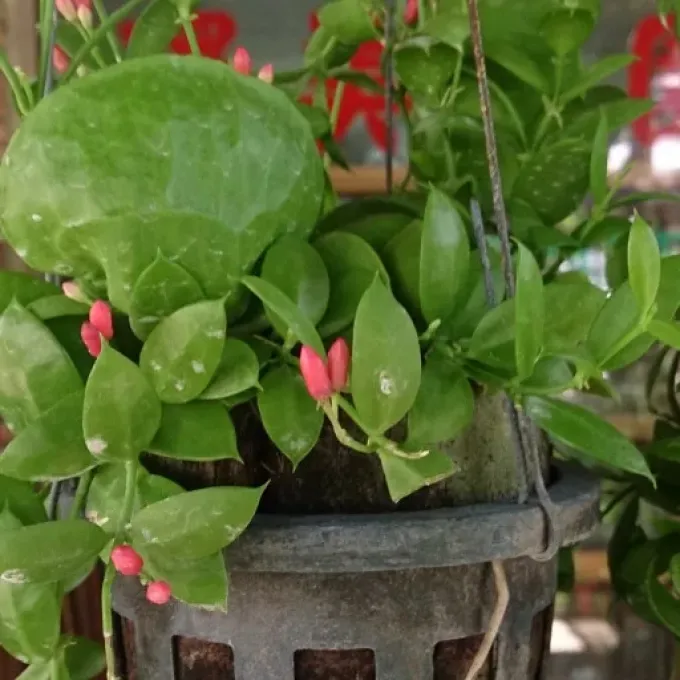
Dischidia vidalii is a remarkable epiphytic plant belonging to the Apocynaceae family. Native to the tropical forests of the Philippines, this species has evolved to thrive on tree bark, obtaining moisture and nutrients from its environment.
The plant is widely known for its modified, pouch-like leaves. These structures serve as natural vessels that can store water and house beneficial symbiotic organisms, allowing the plant to survive in high-canopy environments.
To cultivate this species successfully, it requires bright, indirect light. Direct sunlight can damage the leaves, while insufficient light may cause the plant to lose its characteristic succulent-like appearance and slow down growth.
The growing medium must mimic an epiphytic habitat. A porous, well-draining mix composed of orchid bark, perlite, sphagnum moss, and charcoal is ideal for preventing water retention and ensuring proper gas exchange for the roots.
Maintenance of high ambient humidity is essential for Dischidia vidalii. Regularly misting the plant with demineralized water or using a pebble tray with water beneath the pot helps replicate the humid atmosphere of its native rainforest.
Main diseases and pests
The most common pests affecting Dischidia vidalii in indoor conditions include spider mites and mealybugs, which thrive in low-humidity environments during winter months.
Root rot is the most significant physiological threat caused by overwatering or the use of improper, moisture-retentive potting substrates that suffocate the root system.
Pest control should involve targeted application of horticultural oils or systemic insecticides, ensuring that all nooks and pouches of the foliage are treated thoroughly.
Proper air circulation is crucial for preventing fungal outbreaks and mold growth within the crevices of the plant's unique leaf structures.
Keeping the plant healthy involves avoiding cold drafts and ensuring the substrate dries out sufficiently between watering cycles to maintain a robust and disease-resistant specimen.