
Dischidia ovata
Dischidia ovata
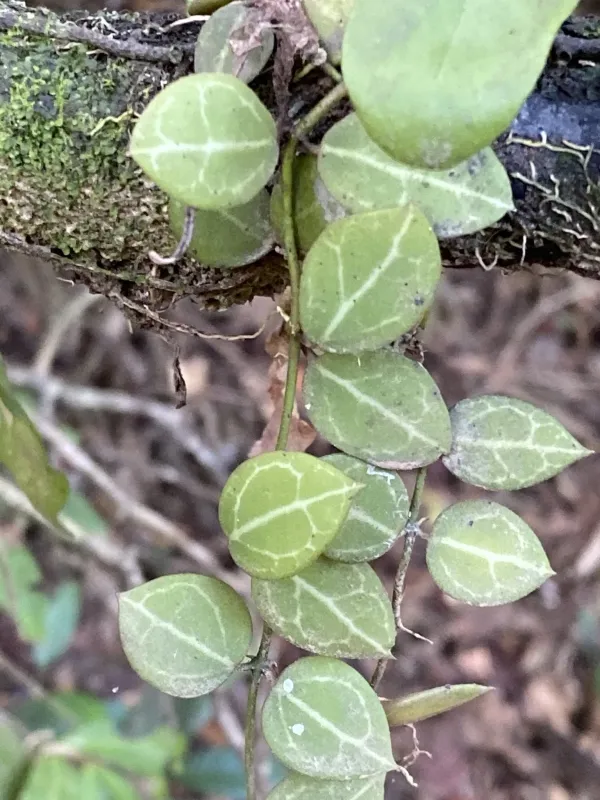
Description
Growing requirements
Dischidia ovata, commonly known as the watermelon dischidia, is a species in the Apocynaceae family. Native to the tropical regions of Southeast Asia, this epiphytic plant has evolved to grow on trees, absorbing nutrients and moisture through its specialized root systems.
The plant is characterized by its trailing stems and ovate, succulent-like leaves which often feature attractive silver-green patterns, resembling watermelon markings. These leaves store water, allowing the plant to withstand periods of lower humidity.
To cultivate this species successfully, provide bright, indirect light. Direct sunlight can scorch the foliage, while insufficient light will lead to elongated, weak stems and loss of the characteristic leaf pattern.
The planting medium must be highly porous, similar to that used for orchids. A mixture of orchid bark, perlite, and long-fiber sphagnum moss is ideal for ensuring that the roots receive sufficient oxygen and do not remain waterlogged.
Optimal growth occurs at temperatures between 20°C and 26°C. High humidity is essential for the healthy development of this plant; therefore, frequent misting or the use of a humidity tray is recommended, especially in indoor environments.
Main diseases and pests
Common pests affecting Dischidia ovata include spider mites, mealybugs, and scale insects. These pests often congregate on the undersides of leaves and at the nodes of the stems, causing stunted growth and leaf drop.
Root rot is the most significant disease, usually caused by overwatering or poor drainage. Once the roots are compromised, the entire plant can rapidly decline, as the succulent leaves cannot compensate for a decayed root system.
Pest management should start with regular inspections and physical removal of the insects using an alcohol-soaked swab. In cases of severe infestation, use insecticidal soaps or neem oil as a safer alternative to harsh chemical pesticides.
Disease prevention involves ensuring proper air circulation and avoiding overhead watering, which can trap moisture and encourage fungal infections. Allow the substrate to dry out slightly between watering cycles to maintain root health.
If fungal spots appear on the foliage, remove the affected leaves immediately and treat the area with a mild fungicide. Keeping the plant in a clean environment with stable conditions is the best defense against long-term problems.