
Dischidia cleistantha
Dischidia cleistantha
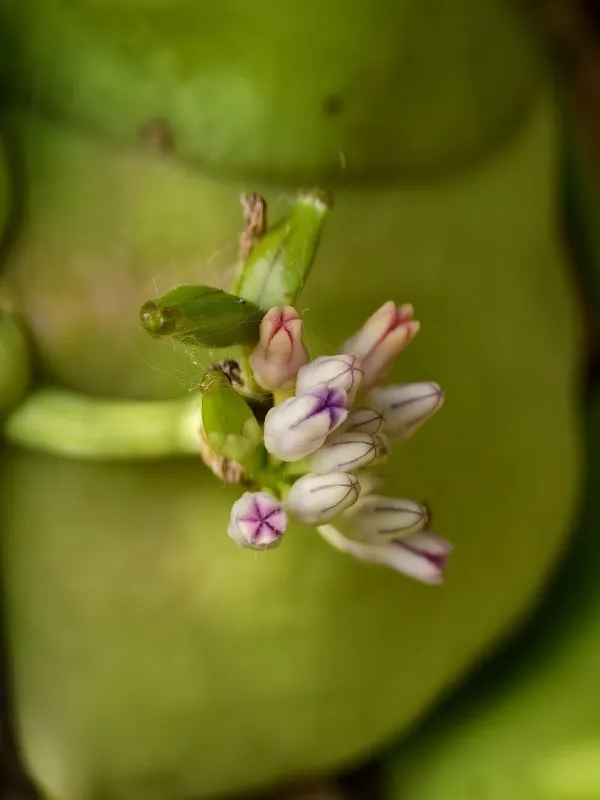
Description
Growing requirements
Dischidia cleistantha is a specialized member of the Apocynaceae family, recognized for its epiphytic habit. Native to the tropical regions of the Philippines, it naturally colonizes tree branches, thriving in the warm and humid conditions found in forest canopies.
The plant is categorized as a succulent epiphyte, possessing thick, fleshy leaves that store moisture. One of its most distinctive botanical features is the production of cleistogamous flowers, which remain closed and self-pollinate, a strategy that ensures reproductive success in secluded environments.
To cultivate this species successfully, one must provide bright, indirect light. Exposure to intense, direct afternoon sun can damage the foliage, leading to dehydration and leaf scorch. A stable environment with consistent temperatures between 20°C and 28°C is essential for healthy development.
The choice of substrate is critical for this species because of its epiphytic nature. It should be grown in a well-aerated mix composed of orchid bark, perlite, sphagnum moss, and charcoal. This composition ensures that the root system has access to oxygen while retaining minimal moisture.
Maintenance involves careful watering, allowing the substrate to dry out partially between intervals to prevent root asphyxiation. High ambient humidity is non-negotiable; if the room air is dry, the use of a humidifier or a greenhouse enclosure is strongly recommended to simulate native conditions.
Main diseases and pests
The most common pests affecting Dischidia cleistantha include spider mites, which thrive in low-humidity environments, and mealybugs. Regular monitoring and wiping the leaves with a damp cloth can significantly reduce the risk of infestation and keep the plant healthy.
Fungal issues, particularly stem and root rot, are frequent outcomes of overwatering or poor ventilation within the root zone. Effective control requires adjusting the watering schedule and ensuring that the plant is grown in a porous, fast-draining potting medium that never becomes waterlogged.