
Dischidia imbricata
Dischidia imbricata
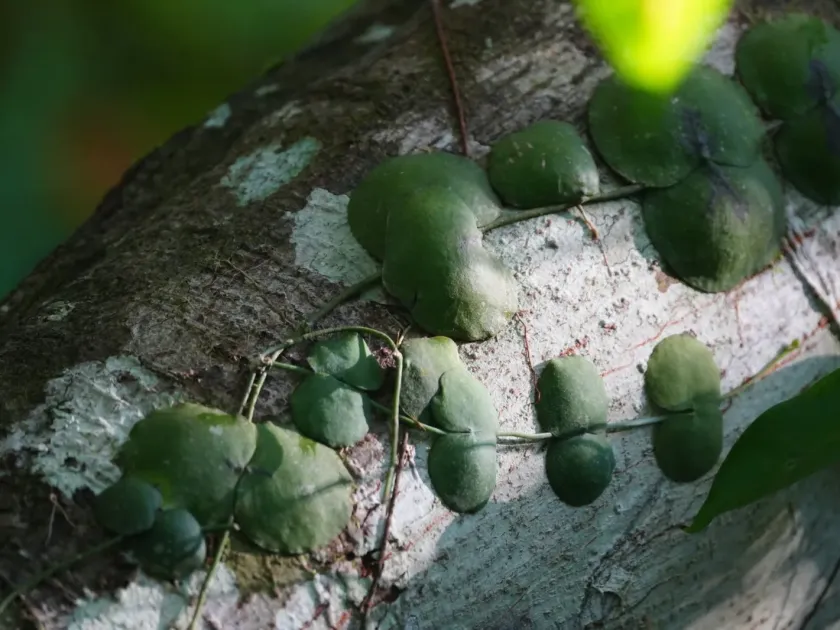
Description
Growing requirements
Dischidia imbricata is a remarkable epiphytic plant belonging to the Apocynaceae family. Native to the tropical regions of Southeast Asia, this species has evolved to thrive in high-humidity environments, typically anchoring itself onto tree trunks and branches within dense rainforest canopies.
The plant is defined by its unique leaf structure, where the leaves overlap in a shingle-like pattern. This adaptation serves as a mechanism for both water retention and nutrient accumulation, as the space between the leaf and the bark can trap moisture, insects, and decomposing organic debris.
For successful cultivation, Dischidia imbricata requires a climate that mimics its natural habitat, with temperatures consistently between 20 and 28 degrees Celsius. High atmospheric humidity is crucial for maintaining the vigor of the plant, as it absorbs moisture primarily through its foliage and aerial root systems.
Soil requirements are highly specific, as the plant cannot tolerate standard potting mixes that retain excessive water. An ideal substrate consists of a coarse mixture of orchid bark, perlite, charcoal, and sphagnum moss to ensure excellent aeration and drainage for the delicate roots.
In modern horticulture, this species is highly valued for its ornamental appeal in terrariums, vivariums, and vertical wall displays. Its ability to grow without soil, provided there is enough moisture and light, makes it a staple for collectors interested in tropical epiphytes and exotic indoor greenery.
Main diseases and pests
The most frequent pests affecting Dischidia imbricata are mealybugs and spider mites, which tend to hide in the tight crevices created by the overlapping leaves. Regular inspections and the use of insecticidal soaps or neem oil are recommended to keep populations under control.
Pathogenic threats are usually related to improper watering practices that lead to root rot or stem blight. Ensuring the plant is not left in water-logged conditions and providing good air circulation is the best preventive measure against the development of lethal fungal infections.