
Hairy Dischidia
Dischidia hirsuta
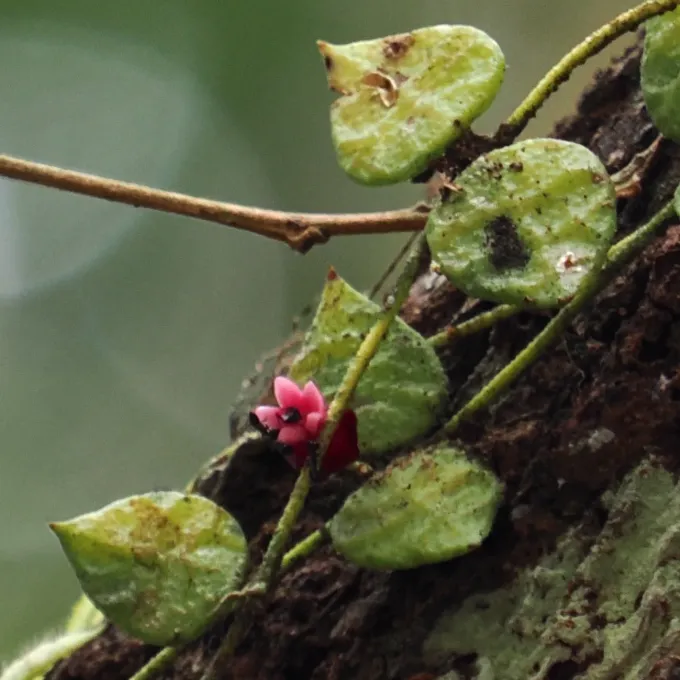
Description
Growing requirements
Hairy Dischidia (Dischidia hirsuta) is a fascinating plant species belonging to the Apocynaceae family. Native to the tropical regions of Southeast Asia, this plant naturally thrives as an epiphyte, attaching itself to trees and growing in high-humidity canopy environments.
The botanical structure of the plant features stems covered with fine hairs and succulent, fleshy leaves. These specialized structures are adaptations that allow the plant to store water and extract nutrients from organic debris and moisture trapped in the air, essential for survival in its native habitat.
Successful cultivation requires environmental conditions that mimic a tropical rainforest. Temperatures should ideally range between +20°C and +28°C. A consistent temperature regime without cold drafts is crucial for the healthy development of this species.
Regarding soil requirements, Dischidia hirsuta demands a very porous and well-draining medium. Standard potting soil is usually unsuitable; instead, a mixture of orchid bark, perlite, charcoal, and sphagnum moss provides the necessary aeration and moisture retention for the roots.
Light management is a vital component of the plant's agrotechnology. Hairy Dischidia prefers bright, indirect sunlight. Exposure to harsh, direct midday sun can result in leaf scorching, while insufficient light will lead to spindly growth and poor color development.
Main diseases and pests
Hairy Dischidia is susceptible to common houseplant pests, including mealybugs, spider mites, and scale insects. These pests often hide in the crevices of the succulent stems and leaves, making them difficult to detect until an infestation is well-established.
Diseases in this crop are primarily linked to poor cultural practices, particularly overwatering, which leads to root rot. When roots are kept in a waterlogged substrate for extended periods, they become unable to breathe, leading to rapid decay of the entire plant structure.
Management of pest populations requires the use of appropriate contact or systemic insecticides. Manual removal of pests using a cotton swab dipped in isopropyl alcohol can be effective for smaller, isolated infestations on the leaves and stems.
Preventative measures are the most effective strategy against plant threats. Ensuring proper air circulation around the plant helps reduce the incidence of fungal growth, while maintaining the correct irrigation cycle prevents the onset of root-related issues.
If decay is observed, immediate corrective action is necessary. This involves pruning back affected sections to healthy tissue and repotting the specimen in fresh, sterile substrate to eliminate pathogen sources and restore the plant's vigor.