
Dischidia major
Dischidia major
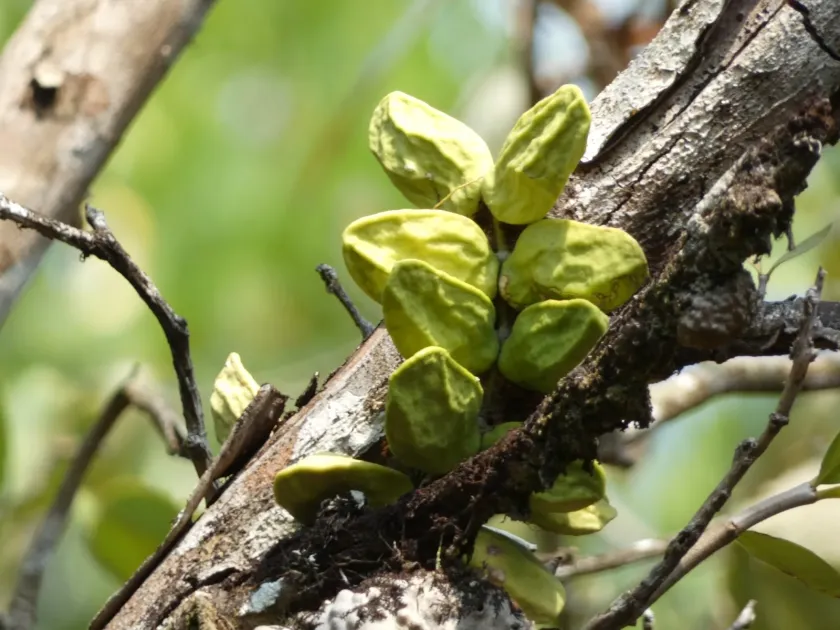
Description
Growing requirements
Dischidia major belongs to the Apocynaceae family and is recognized for its unique adaptation to epiphytic life in the tropical forests of Southeast Asia and Australia. It is famous for its specialized, bladder-like leaves that serve as water storage and homes for symbiotic ants.
The culture requires a tropical environment with high humidity levels and stable temperatures ranging between 20°C and 28°C. Providing a consistent microclimate is essential for maintaining the health of its hollow leaf structures.
Lighting should be bright but indirect; direct sunlight can scorch the succulent tissues of the plant. A location with good air circulation is preferred to simulate the forest canopy conditions where these plants naturally thrive.
Soil requirements focus on excellent aeration and drainage. As an epiphyte, Dischidia major should be planted in a chunky substrate composed of orchid bark, perlite, sphagnum moss, and charcoal, which prevents the roots from sitting in excess moisture.
Watering should be done carefully, allowing the substrate to partially dry out between applications. The use of rainwater or filtered water is recommended to avoid mineral buildup that can affect the plant's delicate tissues.
Main diseases and pests
The most common pests include mealybugs and spider mites, which can hide in the plant's dense foliage or inside the modified leaves. Regular inspection and targeted treatment with organic insecticidal soap are effective methods for management.
Root rot and fungal infections are the primary diseases occurring when the plant is kept in waterlogged conditions. Proper drainage and reducing the frequency of watering during cooler periods can significantly lower the risk of these systemic issues.