
Diascia fetcaniensis
Diascia fetcaniensis Hilliard & B.L. Burtt
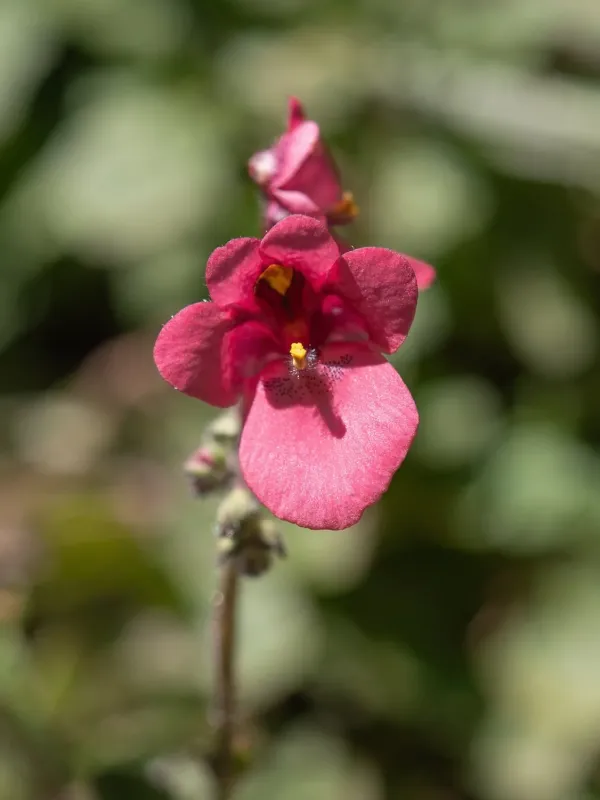
Description
Sowing dates
Diascia fetcaniensis is propagated either through seeds or stem cuttings in controlled greenhouse environments. Seeds should be sown in late February or March, requiring an ambient temperature of around 18–20 degrees Celsius.
The germination process requires a loose, well-draining substrate. Seeds are small and should be lightly covered with fine soil, as exposure to light is necessary for successful germination.
Seedlings are pricked out into individual pots once they develop their first set of true leaves. Frequent pinching of the growing tips is essential during the early stages to encourage lateral branching and a dense growth habit.
Transplanting to the permanent outdoor location should only occur after the risk of frost has passed. The plants adapt well to new conditions, provided the root ball remains intact during the transition.
Vegetative propagation via cuttings is highly effective. Cuttings should be taken in late summer and rooted in a mixture of peat and sand, ensuring they are kept in a bright, cool place throughout the rooting period.
Growing requirements
Diascia fetcaniensis belongs to the Scrophulariaceae family and is native to the high-altitude mountainous regions of Southern Africa. Its biology is adapted to cool, rocky environments with excellent natural drainage.
This species requires full sun to achieve its maximum flowering potential. While it can tolerate partial shade, insufficient light will result in leggy stems and a noticeable decrease in blossom density.
Soil quality must be light, porous, and slightly acidic to neutral. Heavy, clay-based soils that retain too much moisture will inevitably lead to root rot, making the use of grit or sand in the potting mix mandatory.
Watering practices must mimic the conditions of its native habitat, where periods of moisture are followed by drying cycles. Avoid waterlogging the substrate, as the roots are particularly sensitive to hypoxia.
The plant is relatively hardy but benefits from protection during extreme heat waves. Providing mulch around the base of the plant helps maintain a cool root zone, ensuring the plant remains healthy throughout the summer.
Main diseases and pests
Fungal diseases are the primary threat, often caused by stagnant air and excessive humidity. Preventing overcrowding and ensuring good air circulation are the most effective ways to mitigate the risk of infection.
Aphids are common pests, particularly on tender, newly emerged spring growth. Regular monitoring of the foliage tips allows for prompt removal of insects before they form large, damaging colonies.
Spider mites can become a nuisance during hot, dry spells, especially when the plants are grown in containers. Increasing humidity around the plant and keeping it well-watered can help deter these pests.
Whiteflies may infest the plants if they are kept in areas with insufficient ventilation. The use of sticky traps and occasional inspection of the leaf undersides are standard practices for early detection.
In cases of severe disease, the removal and destruction of affected foliage are critical to stopping the spread. Fungicidal applications should be considered only as a last resort, prioritizing organic management whenever possible.