
Dianella revoluta var. brevicaulis
Dianella revoluta R. Br. var. brevicaulis Ostenf.
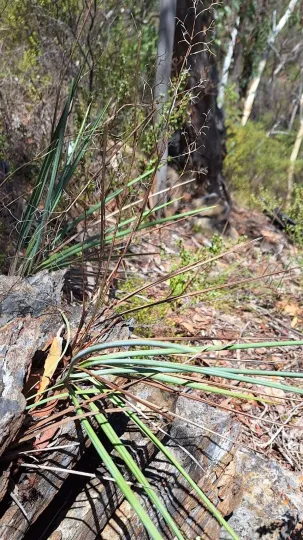
Description
Growing requirements
Dianella revoluta var. brevicaulis is a hardy perennial belonging to the Asphodelaceae family. Native to coastal regions of southern Australia and Tasmania, this plant is well-adapted to sandy, nutrient-poor soils and exposed coastal environments.
Botanically, it is distinguished by its short, compact stature and long, rigid, strap-like leaves. The leaf margins are characteristically revolute, or rolled back, which helps the plant conserve water in arid conditions. It produces small, vibrant blue flowers followed by ornamental berries.
The cultural requirements are straightforward: the plant thrives in full sun to partial shade. Soil must be well-draining, as the plant is highly susceptible to root rot if left in waterlogged conditions. It is an excellent choice for xeriscaping due to its remarkable drought tolerance.
In terms of agricultural and landscape management, minimal maintenance is required. Once established, plants rarely need supplemental irrigation. Occasional pruning of dead foliage is recommended to maintain a tidy appearance, but otherwise, it is a low-input, high-reward ornamental species.
This variety is widely used in landscape design for erosion control, mass planting, and as a border perennial. Its ability to tolerate salty sea breezes and dry spells makes it an ideal candidate for urban and seaside gardens where other species might fail.
Main diseases and pests
The primary threat to Dianella revoluta var. brevicaulis is poor soil drainage, leading to fungal pathogens such as Phytophthora or Pythium. Ensuring proper aeration and avoiding excessive mulch near the crown is crucial.
Insect pests such as snails and slugs may graze on young leaves during damp spring weather. While the plant is generally pest-resistant, monitoring for aphids during periods of rapid growth can help prevent cosmetic damage to the foliage.