
Blue Flax Lily hybrid
Dianella caerulea x Dianella brevipedunculata
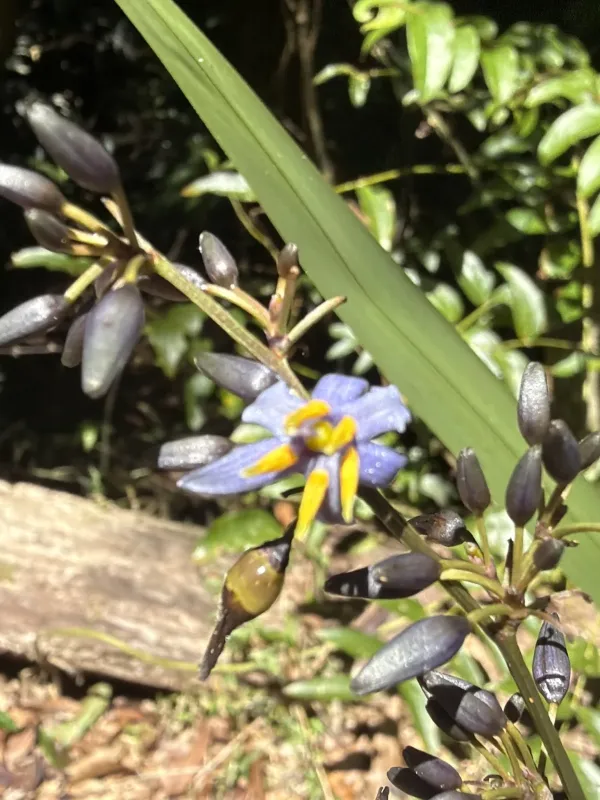
Description
Growing requirements
The Blue Flax Lily hybrid (Dianella caerulea x Dianella brevipedunculata) is an ornamental perennial plant belonging to the Asphodelaceae family. Known for its grass-like foliage and clusters of blue berries, this hybrid is a popular choice for modern landscaping projects.
Originating from the diverse ecosystems of Australia, the plant has evolved to survive in various environments ranging from shaded woodland floors to sun-drenched clearings. This adaptability has made it a versatile plant for horticultural use across different regions.
Cultivation requirements involve well-draining soil with organic amendments to support healthy growth. While it prefers moist, fertile conditions, once established, the hybrid demonstrates significant drought tolerance, making it an excellent candidate for low-maintenance garden designs.
Regarding climate, the plant thrives in mild environments but can tolerate light frost once matured. In extreme heat, providing partial shade and consistent moisture helps maintain the foliage's vibrancy and overall health throughout the growing season.
In terms of хозяйственное использование (economic use), the plant is primarily utilized as a ground cover, edge plant, or for mass planting to control erosion on banks and slopes. Its structural form makes it highly sought after for minimalist and contemporary garden aesthetics.
Main diseases and pests
Root rot is the most common threat to this plant, typically caused by waterlogged soil conditions. Ensuring proper drainage is essential to preventing the decline of the root system and the health of the entire plant.
Pests such as mealybugs and spider mites may occur, particularly in confined settings or greenhouses with poor airflow. Regular monitoring of the leaf undersides is recommended for early intervention using appropriate treatments.
Fungal leaf spot diseases can emerge if the plant is grown in overly crowded conditions where humidity remains trapped. Providing adequate space between individuals helps ensure airflow and reduces the likelihood of infection.
Cold stress can weaken the plant during winter, making it susceptible to opportunistic pathogens when spring arrives. Applying a layer of mulch around the base provides necessary protection in cooler regions.
Periodic division is encouraged to prevent overcrowding and to rejuvenate the plant. By managing the density of the growth, growers can maintain both the aesthetic quality and the physiological vigor of the hybrid over many years.