
Dianella brevipedunculata
Dianella brevipedunculata R. J. F. Hend.
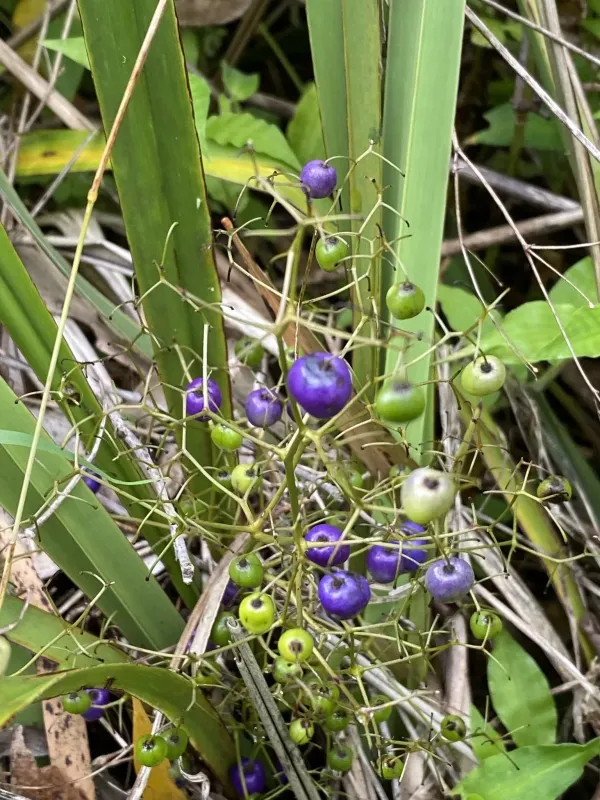
Description
Growing requirements
Dianella brevipedunculata is a rhizomatous perennial belonging to the Asphodelaceae family. This species is highly valued for its striking, grass-like foliage that creates dense, fountain-shaped clumps, making it a popular choice for modern landscape architecture.
The plant originates from Australia, where it thrives in diverse environments, ranging from open woodlands to sheltered slopes. This adaptability allows it to grow well in various settings as long as the fundamental requirements for light and soil structure are met.
For successful growth, it requires well-draining, nutrient-rich soil. It is essential to ensure that the potting mix or garden soil is not overly compacted, as the roots are sensitive to waterlogging, which often leads to root rot issues.
Regarding climate, the plant prefers temperate conditions. While it can withstand periods of light drought once established, it performs best when provided with consistent, moderate watering during the active growing season.
General maintenance involves minimal pruning to remove dead or damaged leaves. The plant responds well to slow-release organic fertilizers applied in early spring to encourage healthy leaf production throughout the season.
Main diseases and pests
The primary threats to Dianella brevipedunculata are soil-borne pathogens. Fungal infections often arise when the soil remains too wet for extended periods, stressing the plant and making it susceptible to rot.
Pests such as snails and slugs can be problematic, particularly in damp or humid garden environments where they feed on the succulent bases of the leaves. Maintaining a clean garden bed helps reduce their impact.
In glasshouse or indoor environments, spider mites can pose a threat, causing the leaves to lose their vibrant green color. Regular inspection of the foliage underside is recommended to identify potential infestations early.
To mitigate the risk of disease, it is advised to provide adequate spacing between individual plants to ensure proper airflow. Good ventilation significantly reduces the humidity levels that pathogens require to spread.
If the plant shows signs of distress, it should be treated with appropriate fungicides or insecticides. Following the treatment, it is beneficial to adjust the watering schedule to prevent a recurrence of the problem.