
Dianella intermedia
Dianella intermedia Endl.
Description
Growing requirements
Dianella intermedia, commonly known as a type of flax lily, is a perennial herb belonging to the family Xanthorrhoeaceae. Native to New Zealand, it is widely distributed across various habitats, ranging from coastal areas to inland forests and mountainous slopes.
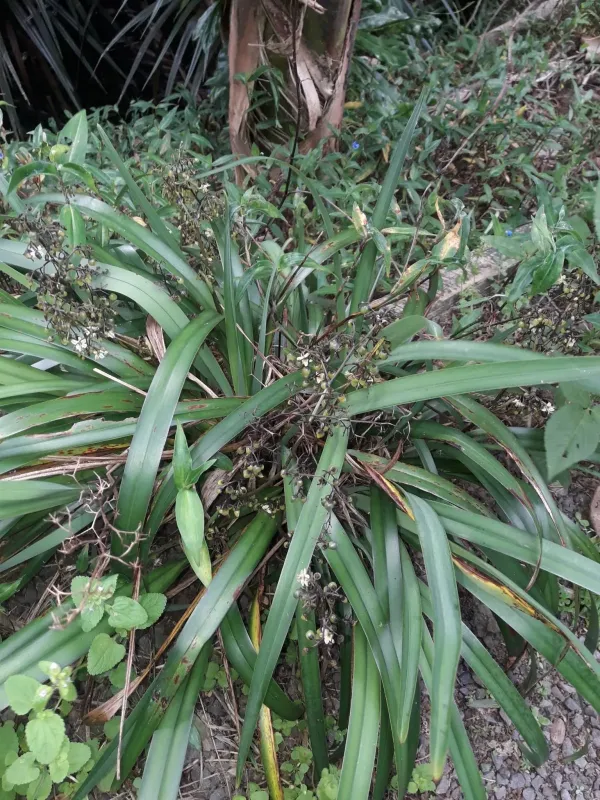
The plant is characterized by its tufted habit, featuring long, arching, grass-like leaves that form a dense base. It produces delicate, star-shaped flowers on erect stems, which develop into striking, bright blue berries that provide significant visual interest throughout the later part of the season.
Successful cultivation requires well-draining soil to prevent root rot, which is the primary cause of plant failure. It thrives in a variety of soil types, including sandy and loamy conditions, provided that the growing medium does not retain excessive moisture for long periods.
This species prefers mild climates, as it is not highly tolerant of severe frost or freezing temperatures. It is quite versatile in terms of light exposure, growing successfully in light shade or sunny spots, provided the latter have adequate moisture levels during hot summer months.
In landscaping, Dianella intermedia is highly valued for its low-maintenance nature and architectural form. It is frequently employed in modern garden designs, mass plantings, and container gardening, serving as an excellent groundcover or accent plant in Mediterranean-style landscapes.
Main diseases and pests
The most significant threat to the health of this species is root decay, typically induced by poor soil drainage or excessive irrigation. This issue is particularly prevalent during periods of high humidity or low soil temperature.
Insect pests, such as mealybugs and scale insects, may occasionally infest the plant, usually clustering near the base of the foliage where moisture and protection are available.
To maintain plant health, it is essential to ensure adequate spacing between plants to promote airflow, which helps to inhibit the spread of fungal spores and prevents damp environments favored by pests.
Regular sanitation, which involves the removal of dead or decaying foliage from the center of the clump, is a key practice to reduce the prevalence of both fungal pathogens and pest harborages.
When monitoring for pests, gardeners should focus on the base of the leaves and the crown of the plant, as these areas are the most susceptible to initial colonization by common ornamental pests.