
Blue Flax-lily
Dianella caerulea Sims var. assera R. J. F. Hend.
Description
Growing requirements
Blue Flax-lily (Dianella caerulea) is a perennial herb belonging to the Asphodelaceae (formerly Xanthorrhoeaceae) family. Native to Australia, it is widely recognized for its robust, grass-like appearance and its ability to thrive in diverse environments, ranging from coastal areas to inland forests.
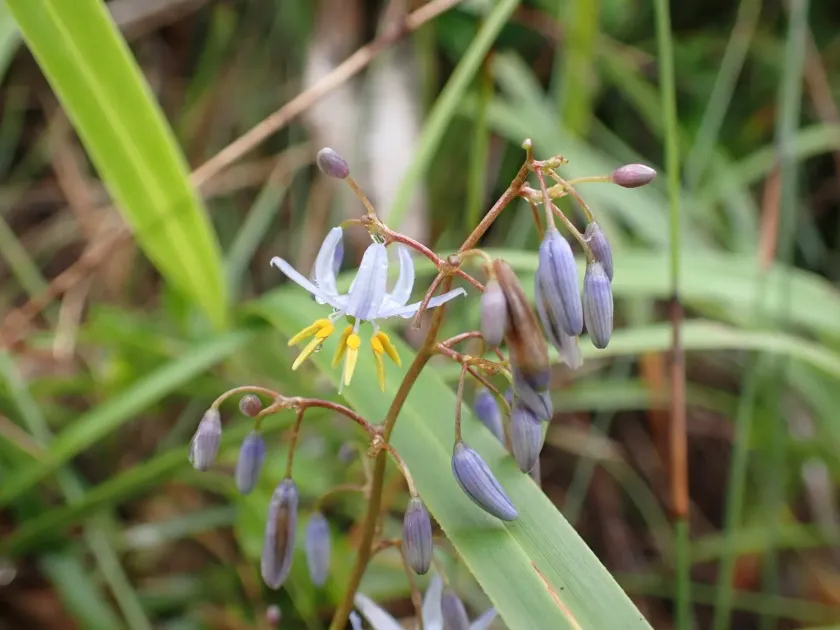
Botanically, the plant features arching, strap-like leaves growing from a rhizomatous base. It is distinguished by its small, blue-to-violet star-shaped flowers that bloom on slender stalks, which eventually develop into striking, glossy blue berries, providing year-round visual interest.
Regarding soil requirements, the plant prefers well-drained, slightly acidic to neutral soil. While it is naturally found in varying fertility levels, consistent drainage is the most critical factor for survival, as the plant is prone to root rot if left in waterlogged conditions for extended periods.
The climate requirements for Dianella caerulea are relatively flexible. It performs best in temperate climates with mild winters. In extreme heat, it benefits from partial shade, while in cooler regions, it should be situated in full sun to maintain its vigor and promote flower development.
Agricultural and landscape use includes ornamental bedding, border planting, and erosion control. Its dense, fibrous root system makes it an excellent choice for stabilizing banks and preventing soil erosion, while its drought tolerance makes it a popular candidate for sustainable, water-wise landscaping.
Main diseases and pests
Primary threats to the health of the Blue Flax-lily usually involve fungal pathogens. Specifically, root rot caused by Phytophthora or Pythium species is common when the plant is grown in heavy, poorly drained soil, which prevents proper oxygenation of the root system.
Pests are generally minor but can include slugs and snails that feed on the foliage during wet seasons. Occasionally, scale insects or aphids may colonize the base of the leaves, though these are typically managed through simple cultural practices or organic insecticidal soap applications.