
Dianella prunina
Dianella prunina R. J. F. Hend.
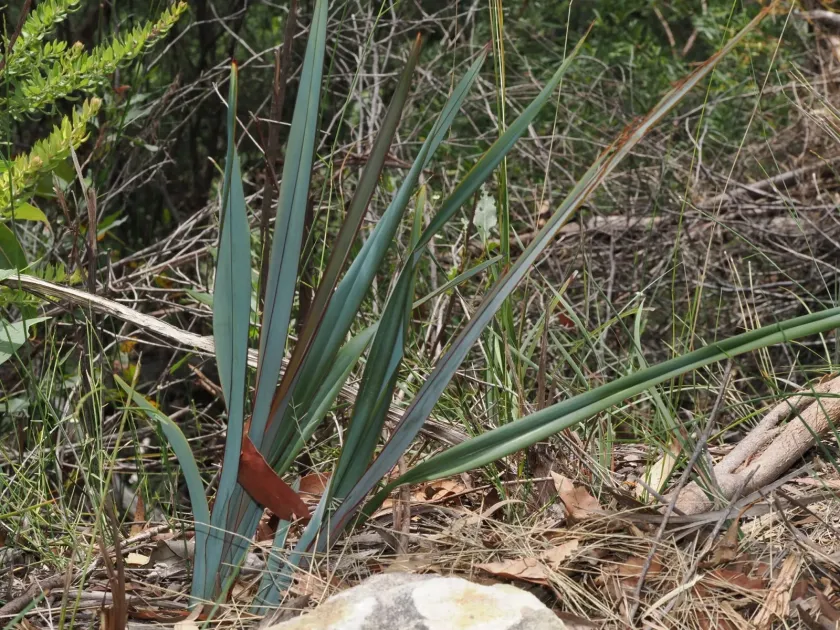
Description
Growing requirements
Dianella prunina belongs to the Xanthorrhoeaceae family and is a perennial herb native to Australia. This plant is well-known for its arching, grass-like leaves that form dense clumps, and its striking, plum-colored fruit which develops after flowering. It is highly valued for its robust nature and architectural form in garden beds.
Regarding soil requirements, Dianella prunina thrives in well-drained, slightly acidic to neutral soils. It is naturally adapted to poorer soils, but it performs best when supplied with adequate organic matter to support healthy growth. Avoid planting in low-lying areas where water tends to pool, as drainage is critical for survival.
Climate adaptability is one of the key features of this species. It prefers full sun to partial shade and exhibits a good level of drought tolerance once established. However, in regions with very hot and dry summers, supplemental watering during the initial growth stages is recommended to help the root system anchor firmly.
In terms of agricultural and horticultural use, the plant is extensively used for ground cover, mass planting, and landscaping in urban parks. Its ability to tolerate wind and salt spray makes it an excellent choice for coastal gardens, where many other species would struggle to survive.
Agrotechnical maintenance involves periodic pruning of old foliage to encourage new, vigorous growth. This practice not only keeps the plant looking tidy but also prevents the build-up of dead plant matter that could harbor pests and diseases, ensuring a long lifespan for the specimen.
Main diseases and pests
Root rot caused by Phytophthora or other water-borne fungi is the most significant threat to Dianella prunina. This usually occurs due to poor soil drainage or excessive irrigation, which leads to oxygen starvation in the root zone and subsequent plant decay.
Pests such as mealybugs and scale insects may occasionally infest the foliage, particularly if the plant is stressed by environmental factors. Keeping the plant healthy and ensuring proper airflow reduces the likelihood of severe infestations, which can otherwise weaken the plant.
Slugs and snails can cause damage to tender new leaves. It is important to keep the area around the base of the plant clear of damp debris, which serves as a hiding place for these pests, especially during the wetter months of the year.
Nutrient imbalances, particularly nitrogen excess, can lead to soft, succulent growth that is more susceptible to insect damage. A balanced, slow-release fertilizer is preferred to promote natural growth rates and improve overall plant resilience against abiotic stressors.
If chemical interventions become necessary, use products specifically labeled for use on ornamental perennials. Always apply treatments during cooler parts of the day to avoid leaf burn, and ensure that the surrounding soil is moist before application to prevent chemical root shock.