
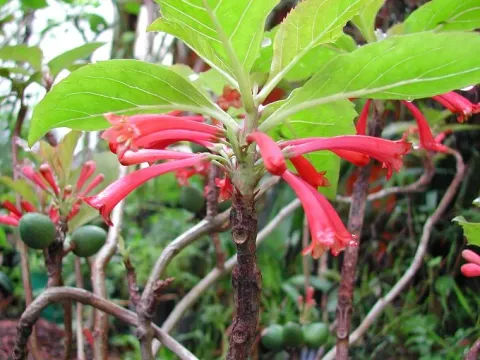
Dermatobotrys
Dermatobotrys
Dermatobotrys is a monotypic genus of plants belonging to the Scrophulariaceae family, originating from the forests of South Africa. As an epiphytic shrub, it is widely recognized by botanists and collectors for its distinctive leather-like foliage and tubular, often colorful flowers.
What the section contains

Dermatobotrys
Botanically, the plant is adapted to grow on other host plants, which makes it a unique addition to specialized botanical collections. Its growth habit requires that the root system receives significant aeration, distinguishing it from conventional terrestrial crops.
In terms of climate requirements, the plant demands consistent, mild temperatures, typically between 18°C and 24°C. It is extremely sensitive to frost and does not tolerate rapid fluctuations in humidity levels, necessitating a controlled environment like a greenhouse.
Soil management for Dermatobotrys is critical; the medium must be highly porous and moisture-retentive but never waterlogged. A substrate composed of orchid bark, high-quality peat, and sphagnum moss provides the ideal foundation for healthy root development.
Care routines must prioritize hydration management. Watering should be frequent enough to maintain moisture but sparse enough to allow the roots to breathe. Providing indirect, bright light is essential, as direct sunlight can easily damage the delicate leaf tissues.
Common threats to Dermatobotrys include root rot, caused primarily by poor drainage or overwatering in stagnant air conditions. Ensuring good circulation is the most effective preventative measure against fungal outbreaks.
Pests such as spider mites and mealybugs represent the main biological threats. These pests thrive in dry environments and can quickly infest the foliage, making regular inspection and prompt application of appropriate treatments necessary.