
Dermatobotrys saundersii
Dermatobotrys saundersii
Description
Growing requirements
Dermatobotrys saundersii is a rare epiphytic shrub that belongs to the Scrophulariaceae family. It is distinct for its habit of growing on tree trunks in its native habitat, though it is managed as an ornamental specimen in specialized botanical collections.
The species originates from the forest regions of South Africa, particularly the KwaZulu-Natal province. Its natural distribution is linked to humid forest environments where it thrives in shaded conditions, utilizing mossy bark surfaces to anchor its root system.
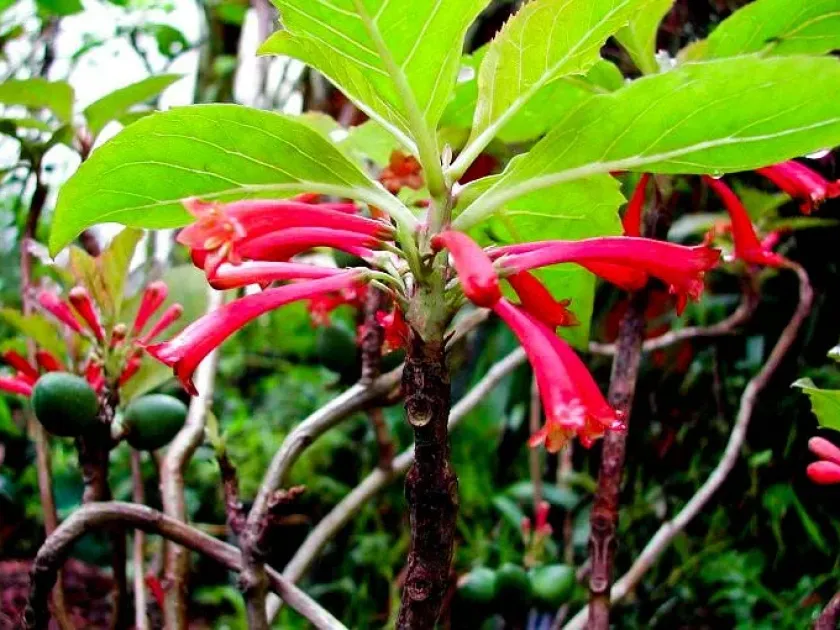
Botanically, the plant is recognized by its succulent, leathery leaves and striking orange-red, tubular flowers that appear during the flowering season. As it grows, the plant develops a woody base, requiring stable support or specialized containers that mimic its natural epiphytic structure.
Climatic requirements for this culture include avoiding direct sunlight and maintaining high levels of ambient humidity. The optimal temperature range for development is between 18°C and 24°C, as the plant is highly sensitive to cold and rapid thermal fluctuations.
Soil management involves providing a loose, airy medium that facilitates rapid drainage. A mixture containing orchid bark, perlite, and organic peat-free components is ideal, as it prevents the roots from suffocating and maintains the necessary moisture levels for the epiphytic root structure.
Main diseases and pests
Common pests affecting this plant include mealybugs and spider mites, which thrive in low-humidity environments. Furthermore, root rot is a frequent issue caused by stagnant water in the substrate, necessitating precise irrigation and excellent ventilation within the growing space.