
Delosperma sutherlandii
Delosperma sutherlandii
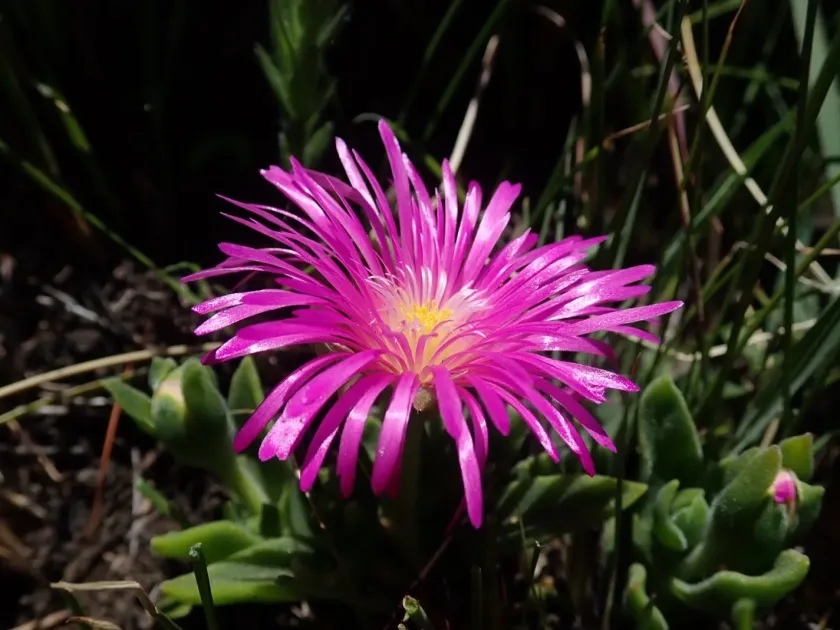
Description
Sowing dates
Sowing Delosperma sutherlandii seeds is best done in late winter or early spring, typically around February or March. To ensure successful germination, seeds should be sown on the surface of moist sandy substrate without covering them, as they require light to activate.
Seed trays should be kept at a temperature of approximately +20°C with regular ventilation. Seedlings emerge unevenly, usually within two to three weeks, after which the containers should be moved to a bright windowsill to promote sturdy growth.
Pricking out the seedlings is performed once the first pair of true leaves appears, moving them into individual pots with a good drainage layer. The plants should only be set out into the open garden once the threat of frost has passed and temperatures are stable.
It is crucial to remember that young Delosperma plants are extremely sensitive to excessive moisture, so watering must be kept strictly moderate. Using grow lights during the early stages of development helps prevent leggy stems and builds a strong root system.
For vegetative propagation, Delosperma sutherlandii cuttings can be taken during summer, allowed to dry for a day, and then planted in moist sand. This method allows for faster development of full-sized plants compared to growing from seed.
Growing requirements
Delosperma sutherlandii belongs to the Aizoaceae family and stands out as one of the most winter-hardy species in its genus. Native to the mountainous regions of South Africa, the plant is naturally adapted to rocky, nutrient-poor soil types.
For optimal planting, select the sunniest spot in the garden; in shade, the plants lose their compact habit, stems become elongated, and flowering is severely reduced or inhibited entirely.
The soil must have excellent water permeability, so in heavy clay soils, it is mandatory to install a drainage layer of gravel or crushed brick. The plant prefers lean, loose substrates with a neutral to slightly acidic pH level.
Watering requirements are minimal: Delosperma stores moisture in its fleshy leaves, allowing it to withstand long periods of drought. However, during very hot summer spells, regular watering at the root zone supports more intense growth and extended flowering.
The culture withstands winter in temperate climates well, provided there is no standing water around the roots. In regions with extremely harsh winters, light coverage with dry brushwood is recommended to protect the plants from ice crust formation.
Main diseases and pests
The primary threat to Delosperma sutherlandii is overwatering, which leads to the development of root and stem rots. Stagnant moisture causes the plant to lose its decorative value rapidly and perish, making proper drainage the key to prevention.
In greenhouse conditions or environments with high humidity, the plant may be affected by mealybugs. These pests are identifiable by their characteristic white, fuzzy coating in leaf axils and can be managed effectively using systemic insecticides.
A wet and prolonged spring creates favorable conditions for slugs and snails. These pests can damage the delicate, fleshy leaves in a short period, so it is recommended to use specific traps or organic deterrents to protect the planting area.
Botrytis, or gray mold, can appear as gray spots on stems when air circulation is poor. Treatment involves removing the affected parts, improving ventilation around the plants, and applying copper-based fungicides if necessary.
Improper agronomic practices, specifically excessive nitrogen fertilization, make plant tissues overly succulent and vulnerable to pathogens. It is best to avoid heavy fertilization if the soil has been prepared correctly with mineral amendments at planting.