
Delosperma lehmannii
Delosperma lehmannii
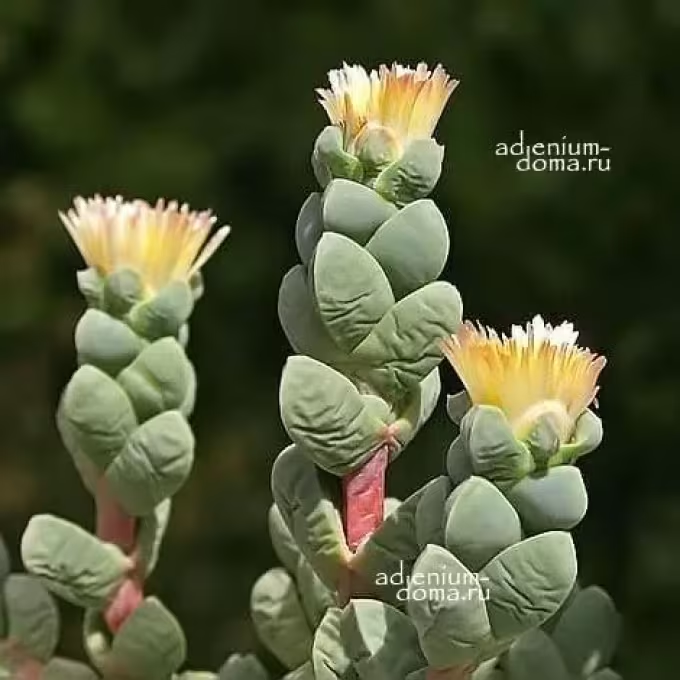
Description
Sowing dates
Delosperma lehmannii is a succulent species belonging to the Aizoaceae family. Propagation is primarily achieved through seeds or stem cuttings, typically conducted during the spring and summer seasons.
When sowing seeds, it is crucial to place them on the surface of a well-draining, sandy substrate without covering them, as light is necessary for germination. Maintaining a steady temperature around 20-22 degrees Celsius ensures optimal results.
Stem cuttings are the preferred method for rapid propagation. Once cut, they must be left to dry for several days until a callous forms, preventing rot when placed into the growing medium.
Rooting occurs efficiently when the cuttings are placed in a porous, slightly moist substrate with good airflow. Avoid over-watering the cuttings during the initial weeks of development.
Once established, the young succulents should be moved to individual containers or a permanent spot with high light intensity to promote a compact and healthy growth habit.
Growing requirements
Originating from the arid regions of South Africa, this species demands high light conditions. Full sun is necessary to maintain the vibrant color and the characteristic waxy texture of its leaves.
Soil composition must be extremely porous. A mixture of gravel, perlite, and a small amount of potting soil is recommended to facilitate rapid drainage and prevent root rot.
Irrigation practices follow a strict wet-dry cycle. The soil must be allowed to dry completely between watering sessions, and in winter, the plant should be kept almost entirely dry.
While the plant can withstand some temperature fluctuations, it is sensitive to prolonged frost and excessive humidity. Therefore, it is best suited for containers in colder climates.
Proper agronomic management involves regular maintenance, such as removing shriveled leaves and ensuring adequate space between plants to allow for good ventilation, which is vital for preventing disease.
Main diseases and pests
The most common threat to Delosperma lehmannii is root rot, frequently caused by over-watering or poor soil drainage. Using mineral-heavy soil is the most effective preventative measure.
Mealybugs are the most frequent insect pests. These pests tend to congregate in the axils of the leaves, drawing sap and causing the plant to weaken or develop stunted growth.
Spider mites can also become a problem in hot and dry environments. They are typically identified by microscopic spots on the foliage and a very fine webbing between the stems.
Treatment involves using targeted insecticides or gentle manual cleaning with alcohol-soaked swabs for mealybugs, and increasing local humidity to discourage spider mite infestations.
- Regular inspection of the plant's core is essential for early pest detection.
- Maintaining a consistent dry winter dormancy period significantly improves the plant's resilience.