
Delosperma aberdeenense
Delosperma aberdeenense
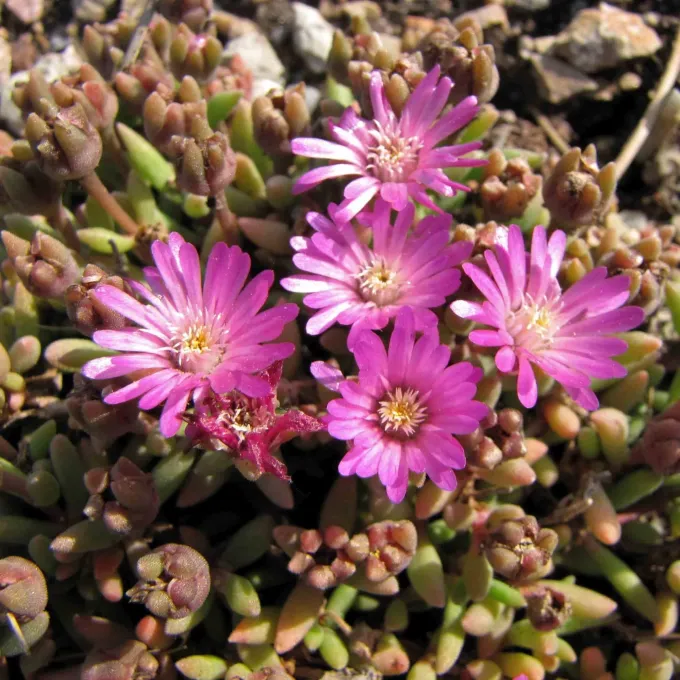
Description
Sowing dates
Sowing seeds of Delosperma aberdeenense is best done in early spring, using a well-draining, sandy compost mix. Seeds should be surface-sown and lightly pressed into the substrate without covering them, as they require light to germinate effectively.
Place the containers in a warm location with temperatures ranging between +20 °C and +22 °C. Keep the soil slightly moist but not waterlogged, using a spray bottle to prevent displacing the tiny seeds, and cover with a clear lid to maintain humidity.
Once seedlings have developed their first true leaves, they should be gradually acclimated to lower humidity levels. Careful handling is necessary during transplanting, as the young seedlings of this succulent species are quite delicate and prone to physical damage.
Transplanting into the permanent location in the garden should occur after the danger of frost has passed. Ensure that the soil is warm and dry to encourage rapid root establishment before the onset of the peak summer heat.
Propagation via cuttings is a highly reliable method for this species. Take succulent stem cuttings during the summer months, allow the cut ends to callus for a few days, and then insert them into a dry, porous rooting medium until roots form.
Growing requirements
Delosperma aberdeenense is a fascinating member of the Aizoaceae family, native to the arid regions of South Africa. It has evolved specific biological traits, such as succulent foliage, to store moisture and thrive in extremely harsh, sun-drenched environments.
The plant requires full sun exposure to maintain its compact growth habit and vibrant flowering potential. If grown in partial shade, the plant will become leggy and significantly less resilient to pests and environmental stressors.
Soil structure is critical for success; the medium must be highly porous and mineral-based. Heavy, organic-rich soils retain too much water, which inevitably leads to root rot, making drainage the most important aspect of its cultivation.
In terms of climate, it prefers hot, dry summers and cool, relatively dry winters. While it shows some cold hardiness, protecting the crown of the plant from prolonged wetness during winter is essential for its survival in temperate climates.
Little to no fertilizer is required for this plant. If growth seems stagnant, a very weak dose of a low-nitrogen, high-potassium fertilizer applied in late spring may suffice, but generally, the plant thrives in low-fertility conditions.
Main diseases and pests
The primary threat to the health of Delosperma aberdeenense is moisture-related fungal disease, particularly root rot. Providing a top dressing of grit or gravel around the base of the plant helps keep the foliage dry and prevents stem decay.
Mealybugs are the most common pests encountered with this species, often congregating in the dense mats of foliage. Regular inspections allow for early detection, and infestations can usually be managed with targeted application of neem oil or insecticides.
Aphids can occasionally infest new growth and flower buds during the spring. While they rarely cause fatal damage, their presence can weaken the plant and serve as a vector for secondary infections, requiring prompt treatment.
Spider mites may appear if the growing environment becomes too stagnant and dry. Ensuring good airflow around the plants and avoiding overcrowded plantings are effective preventative measures against these tiny but harmful pests.
Leaf spots caused by fungal pathogens can develop if plants are subjected to overhead irrigation during humid weather. Always water at the base of the plant, preferably early in the day, to allow any accidental moisture on leaves to evaporate quickly.