
Delosperma herbeum
Delosperma herbeum
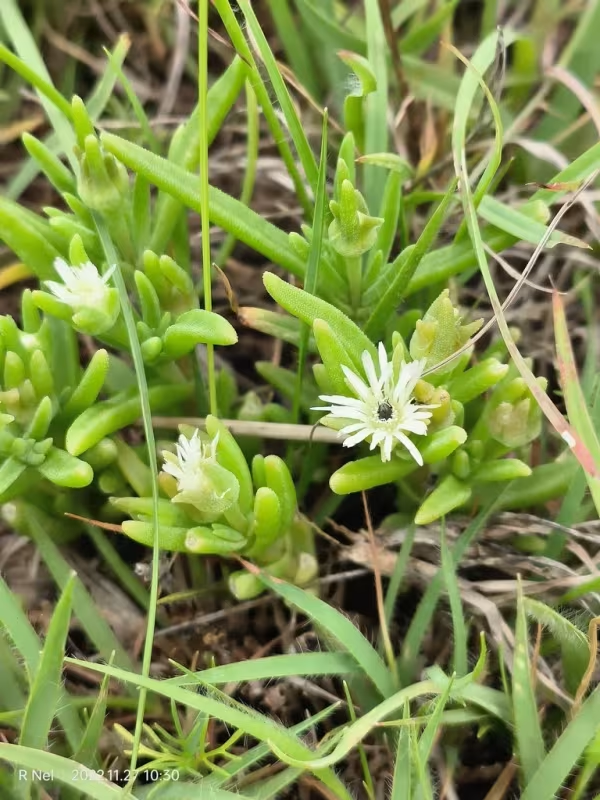
Description
Sowing dates
Sowing Delosperma herbeum seeds should be initiated in late winter or early spring to ensure the seedlings are well-established before transplanting outdoors.
Seeds are sown on the surface of a light, well-draining substrate and pressed gently without covering, as they require light to germinate effectively.
Maintaining a consistent environment with temperatures between 20–25 degrees Celsius is critical for high germination rates during the first few weeks.
Once the seedlings are large enough to handle, they should be carefully pricked out and transplanted into individual pots to avoid root competition.
Hardening off the plants is a necessary step before transferring them to their final location in the garden to ensure they adapt to ambient conditions.
Growing requirements
Delosperma herbeum is a member of the Aizoaceae family, recognized for its succulent growth habit and resilience in harsh, arid environmental conditions.
The plant demands full exposure to direct sunlight for the majority of the day to maintain its compact growth form and to encourage vibrant floral displays.
Soil composition must be extremely porous; sandy or gravelly soils are ideal to facilitate rapid water drainage and prevent the accumulation of moisture around the neck.
While drought-tolerant, the plant benefits from occasional supplemental watering during prolonged heat waves, ensuring the water does not wet the leaf rosettes.
In terms of temperature, this species thrives in warm, dry climates and should be protected from winter moisture, which is often more damaging than the cold itself.
Main diseases and pests
The primary threat to Delosperma herbeum is root rot caused by poor soil drainage, which quickly destroys the plant's delicate vascular system in wet soil.
Fungal pathogens such as mildew can develop if the foliage remains wet for extended periods or if air circulation around the plants is significantly restricted.
Common succulent pests, including aphids and spider mites, may infest the plants during periods of stress or in environments with low light levels.
Mealybugs can occasionally attack the roots, which often goes unnoticed until the plant begins to show visible signs of decline or yellowing of the leaves.
Proactive management involves ensuring a dry growing environment, monitoring for early signs of infestation, and applying appropriate pesticides only when necessary.