
Dark-leaved willow
Salix myrsinifolia Salisb.
Description
Growing requirements
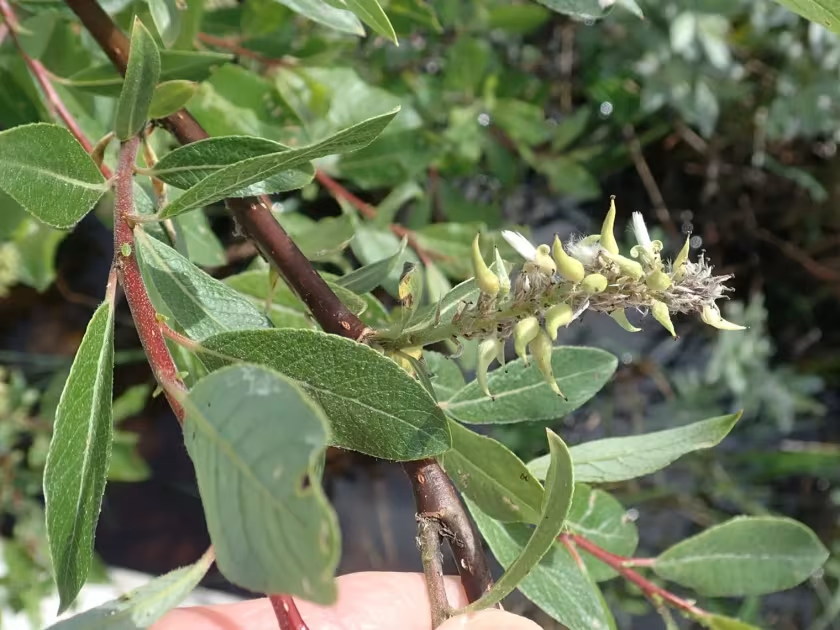
The dark-leaved willow (Salix myrsinifolia Salisb.), a member of the Salicaceae family, is a resilient deciduous shrub. It typically grows up to 3–4 meters in height and is known for its distinct foliage that turns dark, almost black, when dried or in late autumn, which serves as a unique botanical identifier.
Native to Europe and parts of Asia, this willow species is naturally adapted to moist environments, such as riverbanks, peatlands, and wet meadows. It thrives in locations with consistent soil moisture, showing remarkable tolerance for conditions that might be detrimental to other woody plants.
In terms of soil requirements, the species prefers fertile, loamy soils but is versatile enough to grow in slightly acidic to neutral substrates. It is exceptionally well-suited for wetlands or areas where high water tables prevent the cultivation of standard agricultural crops.
The climate requirements of Salix myrsinifolia are defined by its high frost resistance. It is well-adapted to northern temperate climates, surviving harsh winter conditions without significant damage to its vascular structure, making it a reliable choice for cold-region agroforestry.
Agronomic propagation is primarily conducted through cuttings. These vegetative units root easily in moist, prepared soil. Proper site selection is vital, ensuring the plants receive sufficient sunlight, which is necessary to maximize the growth rate of new shoots.
Yield
The industrial usage of the dark-leaved willow is diverse, focusing on bioenergy, handicrafts, and soil conservation. Its flexible branches are highly valued for traditional willow-weaving techniques, providing raw materials for baskets, garden fencing, and various handcrafted goods.
As a biomass crop, this willow is increasingly utilized for renewable energy production. Its rapid regenerative capacity allows for the harvesting of wood biomass on a short-rotation cycle (3–5 years), which is then processed into wood chips or fuel pellets for heating systems.
Environmental services provided by this plant are significant. It is frequently employed in phytoremediation and riverbank stabilization projects to prevent soil erosion. By securing the ground with a dense root network, it helps preserve land integrity in sensitive areas.
Within agricultural systems, dark-leaved willow is planted to form windbreaks around arable land. These natural barriers reduce soil moisture loss and protect sensitive crop varieties from damaging wind currents, thereby improving the overall agricultural output of the farm.
- Raw material for wickerwork and furniture.
- Renewable biomass source for biofuels.
- Erosion control and shoreline stabilization.
- Windbreak and shelterbelt implementation.
- Early-season nectar source for apiaries.
Main diseases and pests
Pest management for Salix myrsinifolia mainly involves controlling leaf beetles and weevils that feed on the foliage. Early detection through regular field scouting is recommended to keep pest populations below economic damage thresholds, minimizing the need for synthetic intervention.
Fungal diseases, including rust and leaf spots, can pose a risk during periods of high humidity and poor air circulation. Effective agronomic practice includes proper spacing during planting to ensure adequate airflow, which is the most sustainable way to prevent the rapid spread of fungal pathogens.