
Violet willow
Salix daphnoides Vill.
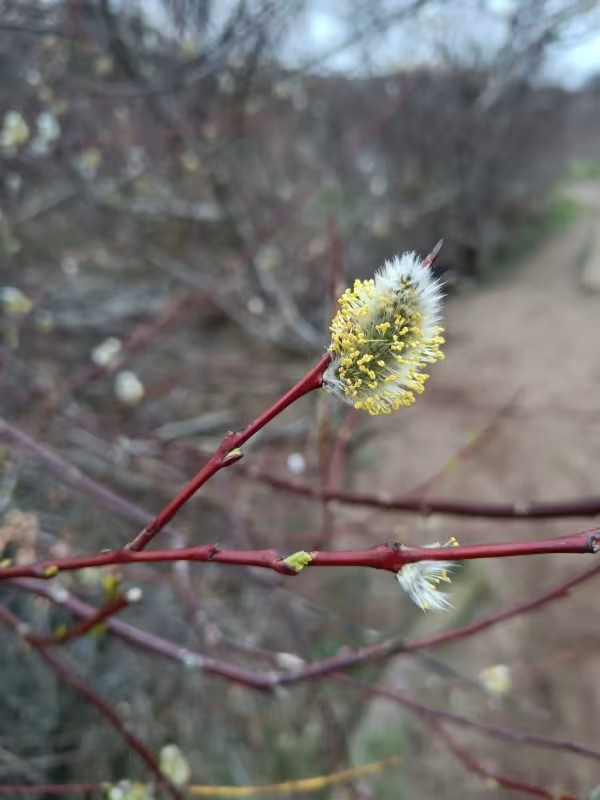
Description
Sowing dates
Violet willow (Salix daphnoides) propagation is most successful when using hardwood cuttings, which should be planted in early spring before the buds begin to swell.
In large-scale plantings, cuttings approximately 20 to 30 centimeters in length are inserted into well-prepared soil, leaving one or two buds exposed above the ground level.
Correct spacing is critical for maximizing productivity; for basketry willow, rows are typically spaced about 0.5 meters apart to encourage long, straight shoots.
While autumn planting is possible in warmer climates, spring remains the preferred time in most regions to ensure that the root system develops before the winter frost sets in.
Immediate irrigation and mulching after planting are essential steps to maintain soil moisture and minimize competition from weeds during the vulnerable establishment phase.
Growing requirements
As a member of the Salicaceae family, the Violet willow is a highly light-demanding species that thrives best in open locations with full sun exposure.
The species is remarkably adaptable to various soil types, including sandy and gravelly soils, making it an excellent choice for sand dune stabilization and soil erosion control.
It prefers moist soils but demonstrates better drought tolerance than many other willow species, provided it has access to groundwater or adequate initial watering.
The plant is highly hardy and can withstand severe winter temperatures, making it a reliable choice for reforestation and windbreak projects in northern temperate zones.
Soil pH levels ranging from slightly acidic to neutral are ideal for optimal growth; extremely alkaline soils should be avoided to prevent nutrient deficiencies.
Yield
The economic value of Salix daphnoides is primarily defined by its high-quality flexible shoots, which are highly prized by the artisanal basketry and wicker-working industry.
For bioenergy purposes, the plant serves as a fast-growing biomass source, producing significant amounts of dry matter per hectare annually under intensive management.
Annual coppicing, or cutting the plant back to the base, is required to maintain the high productivity and ensure the production of uniform, straight rods for harvest.
Yields can be maximized by consistent weed control and occasional nitrogen fertilization during the peak growth season, which accelerates the regeneration of the coppiced stools.
Properly managed plantations can remain productive for over a decade, providing a consistent supply of biomass or high-quality wood material for various craft applications.
Main diseases and pests
The Violet willow is susceptible to several common pests, including willow leaf beetles and various weevil species, which can defoliate the plant if left unchecked.
Fungal diseases such as willow rust and various leaf spot pathogens can occur, particularly in humid climates with poor air circulation within the plantation rows.
Effective management strategies include the use of targeted insecticides for pest control and systemic fungicides to manage recurring fungal outbreaks in nursery settings.
Sanitation is a critical part of threat management; removing fallen leaves and infected branches during the dormant season helps prevent the spread of pathogens.
- Willow leaf beetles
- Rust fungi (Melampsora spp.)
- Cytospora canker
- Aphid infestations
Harvesting
Harvesting typically takes place during the dormant winter period, from late autumn to early spring, when the wood is most flexible and the plant is at its lowest metabolic activity.
For basketry, the shoots must be carefully hand-cut at the base, sorted by length and thickness, and stored in dry, cool conditions until they are ready for soaking and weaving.
Mechanized harvesting is employed for bioenergy plantations, using specialized equipment to harvest the biomass during the winter dormancy to maximize energy content.
The timing of the harvest is crucial to avoid damaging the rootstock, which could lead to reduced vigor and vulnerability to subsequent pest or disease attacks.
After the harvest, the plantation area should be cleaned of debris, and in some systems, a light soil cultivation is performed to stimulate vigorous regrowth for the upcoming season.