
Sichuan cycad
Cycas szechuanensis
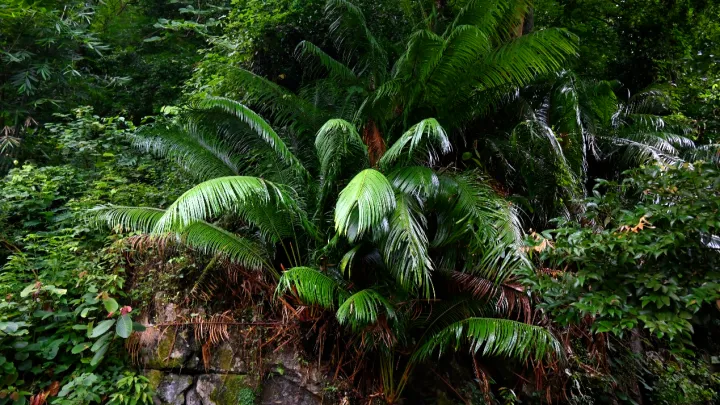
Description
Growing requirements
The Sichuan cycad (Cycas szechuanensis) is a rare species belonging to the family Cycadaceae. It is a slow-growing, primitive seed plant that retains ancient morphological characteristics.
Originating from the Sichuan and Guizhou provinces in China, this plant thrives in rocky, well-draining substrates. In cultivation, it requires a specialized soil mix that prevents water retention.
The species has specific climate requirements. It prefers high atmospheric humidity and stable warm temperatures. It is generally not cold-hardy and must be kept in greenhouse conditions in non-tropical zones.
Proper cultivation involves providing bright, filtered light. Exposure to intense, direct tropical sun can damage the foliage, while deep shade will cause the plant to etiolate and become weak.
Due to its rarity and slow growth, it is cultivated primarily in botanical collections and high-end landscaping projects. It is protected by international conservation laws regarding its habitat.
Main diseases and pests
Common pests include armored scale insects and mealybugs, which are notoriously difficult to control once established on the tough, leathery leaves of the cycad.
Root rot is the most common physiological threat. It is frequently caused by poor drainage combined with excessive irrigation, which damages the specialized root structure.
Spider mites are prevalent in indoor environments where air circulation is poor and humidity levels are not maintained properly during the winter months.
The application of systemic insecticides is recommended to manage infestations of sap-sucking pests, though caution must be taken with dosage for sensitive specimens.
Maintenance of optimal environmental conditions is the most effective way to avoid disease. Regular inspection of the crown and root zone is essential for long-term health.