
Cycad
Cycas L.
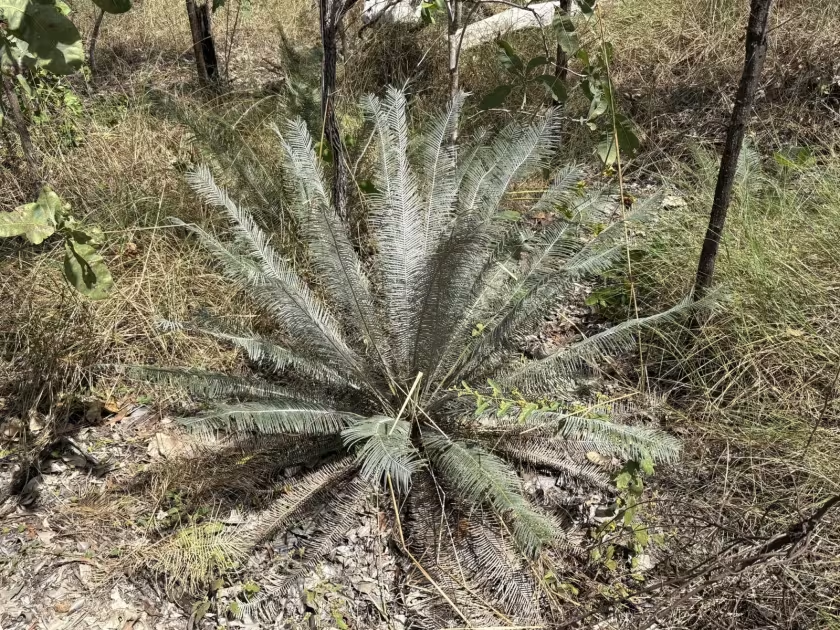
Description
Growing requirements
Cycads belong to the Cycadaceae family, representing an ancient lineage of gymnosperms that have survived since the prehistoric era. Their natural habitat is primarily distributed throughout the tropical and subtropical regions of Africa, Asia, and Australia, where they thrive in warm, well-lit environments.
Cultivation requirements involve a well-draining, slightly acidic to neutral substrate. Because these plants are highly sensitive to root asphyxiation, a potting mix with coarse sand, peat, and organic matter is recommended to facilitate optimal water drainage and root aeration.
Climatic conditions for healthy growth require temperatures between 20°C and 30°C. Cycads perform best in bright, indirect light; while they can tolerate some direct sun when mature, younger plants are susceptible to leaf scorch if exposed to intense, unfiltered light for long periods.
Agronomic practices focus on a disciplined irrigation schedule. During the growing season, consistent moisture is vital, but the plant must be allowed to dry out significantly between watering sessions. Over-fertilization should be avoided; instead, use balanced slow-release fertilizers sparingly during the warm months.
Regarding economic utility, cycads are primarily utilized in the nursery industry for high-end landscape and interior design. While some indigenous cultures have processed the starch-rich trunks for food, this requires complex detoxification, so it is not a common practice in modern commercial agriculture.
Main diseases and pests
The primary insect pests affecting cycads are scale insects and mealybugs, which cluster on the underside of the leaflets and the crown, causing chlorosis and stunted leaf development.
Root rot, often caused by the fungus Phytophthora, is the most common disease associated with poor cultural practices, such as excessive irrigation and inadequate soil drainage.
Spider mites represent a recurring threat, particularly in low-humidity environments, leading to stippling on the leaves and eventually causing the foliage to turn brown and necrotic.
Integrated pest management should be implemented using horticultural oils for mild infestations or systemic pesticides when the infestation pressure is severe enough to threaten the plant's structural integrity.
Cultural control, including maintaining good air circulation and inspecting the crown for signs of decay, is essential for long-term health and preventing the spread of secondary pathogens.