
Cycas pectinata
Cycas pectinata
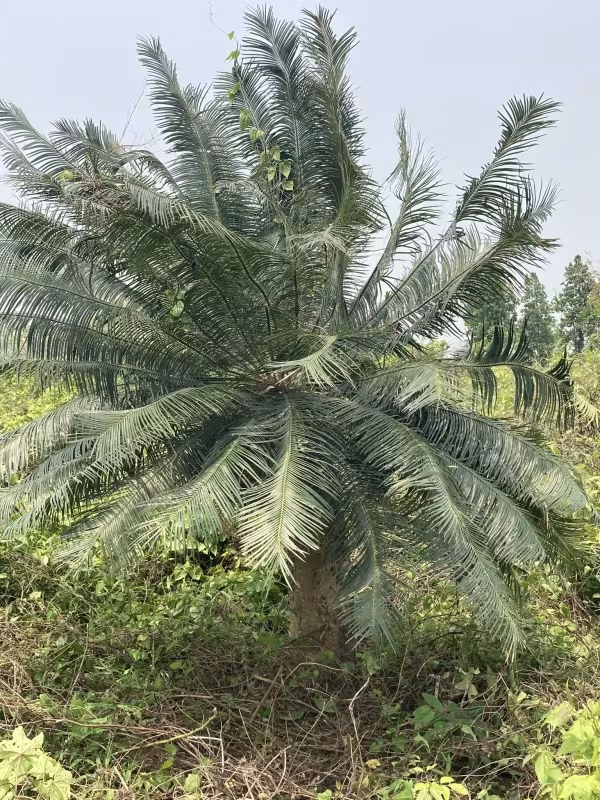
Description
Sowing dates
Propagation of Cycas pectinata is primarily achieved through seeds or by separating offsets from the base of the trunk.
Seeds should be sown in a well-draining, sandy medium immediately after collection to ensure the highest germination success rate.
The germination process requires constant warmth between 25°C and 30°C, and it may take several months for the first leaves to emerge.
It is crucial to keep the substrate moist but not waterlogged during the germination stage to prevent fungal infections.
Offset propagation is a more reliable method for hobbyists, involving the careful removal of side shoots that develop near the stem base.
Growing requirements
Cycas pectinata thrives in bright, filtered light and requires a stable tropical environment to maintain its vigorous growth habit.
The soil profile should be deep and extremely porous to avoid the accumulation of stagnant moisture around the fleshy roots.
This species is well-adapted to high humidity, which mimics its native habitats in the foothills and forests of Asia.
Nutrient requirements are moderate; slow-release fertilizers applied during the growing season help maintain the dark green color of the leaves.
Air circulation is vital for the plant's health, preventing the buildup of pests and ensuring the foliage remains dry between mistings.
Main diseases and pests
The plant is frequently targeted by mealybugs and scale insects, which hide in the protected spaces between the leaf bases.
Root rot is the most common physiological disorder, typically triggered by improper irrigation cycles or heavy, water-retaining soils.
Systemic insecticides are effective in managing pest populations, while preventive fungicide treatments are recommended during periods of high humidity.
Environmental stress, such as sudden temperature drops or lack of light, can cause leaf chlorosis and weaken the plant's immune response.
Regular inspection of the plant's heart and underside of fronds allows for early detection of potential threats, minimizing the need for chemical intervention.